

Overview
Induction heating for wheel bearings and hubs is an advanced technique revolutionizing automotive repair by providing a safer, faster, and more efficient method for loosening and removing stubborn mechanical parts. This process uses electromagnetic induction to heat metal components without direct contact, eliminating the need for open flames or torch-based heating methods. As a result, it significantly reduces risks associated with traditional heating, such as fire hazards, overheating, or damage to nearby components.
In automotive repair shops, induction heating wheel bearing and wheel hub removal are common challenges, especially when dealing with seized hubs or press-fit parts. The induction heater generates heat rapidly and uniformly, enabling technicians to expand metal parts just enough to release them without excessive thermal stress. This precise heating method preserves the integrity of wheel hubs and bearings, ensuring they can be serviced or replaced without unintended damage.
"Using an induction heater in automotive repair not only enhances safety but also cuts operational time drastically by avoiding prolonged manual efforts or risky flame applications."
Moreover, induction heating is environmentally friendly and contributes to a cleaner workspace by eliminating CO₂ emissions associated with gas-based heating. This aligns well with modern automotive workshops aiming to reduce their carbon footprint while maintaining high productivity. The technology is versatile and adaptable to various metals, making it suitable for different vehicle makes and models.
Overall, induction heating represents a crucial innovation in automotive repair, helping mechanics tackle the challenges of seized wheel hubs and bearings efficiently while protecting surrounding components and improving workplace safety.
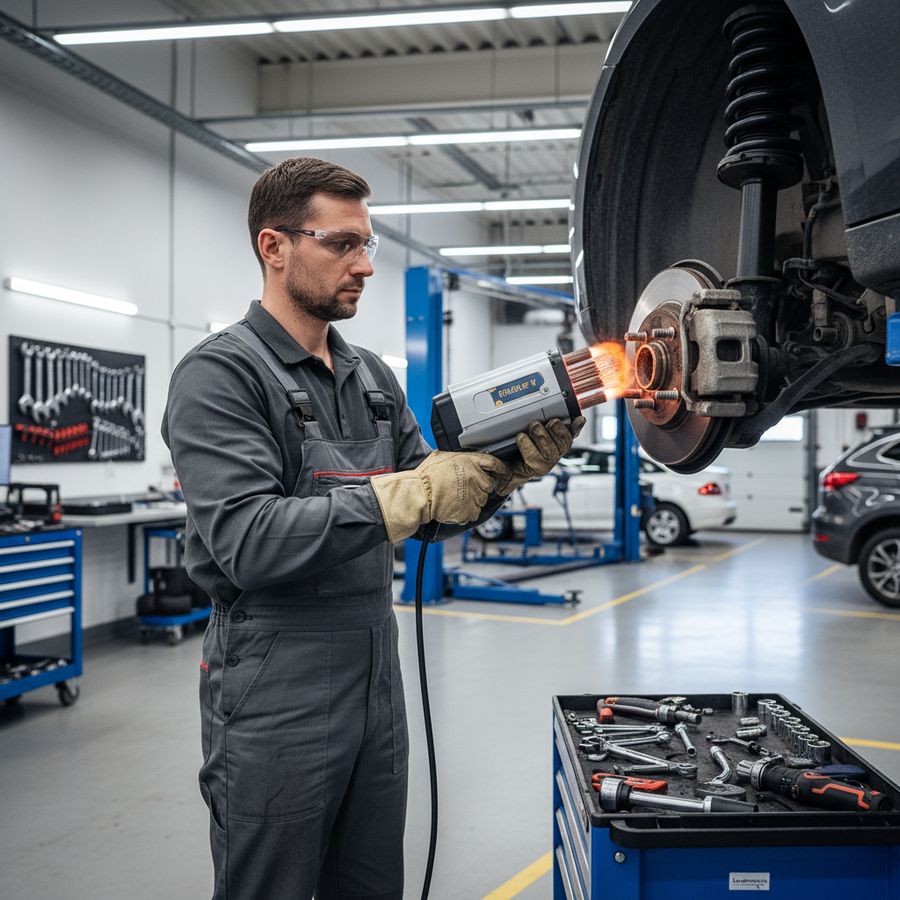
When to use heat on hubs and bearings
Heat application on wheel hubs and bearings is often necessary during automotive repair when components become seized or press-fitted tightly due to corrosion, rust, or thermal expansion differences. Induction heating is especially effective in these scenarios because it allows controlled, even heating to loosen the mechanical bond without risking damage to sensitive parts.
Common situations to use induction heating include:
-
Removal of seized wheel hubs or bearings that cannot be separated by mechanical force alone.
-
Loosening press-fit parts during disassembly or maintenance.
-
Preheating components to facilitate alignment or assembly.
-
Addressing corrosion-induced bonding where rust has effectively welded components together.
Using heat in these contexts helps to expand the metal of the hub or bearing housing, making it easier to detach without applying excessive force that might cause warping or cracking. Induction heaters stand out because they provide rapid heating directly into the metal, concentrating energy where it is needed most while leaving adjacent parts cool.
It's important to note that heat should be applied only when necessary and with care to avoid overheating. Overheating can degrade bearing grease, damage seals, or warp metal surfaces, leading to further complications. Induction heating allows precise temperature control, which is a considerable advantage over traditional torches or open-flame methods.
"Applying heat with an induction heater on wheel hubs and bearings is a time-saving, safe, and effective solution that avoids the risks of open flames and excessive mechanical force."
In summary, induction heating is best used when mechanical separation is difficult or impossible due to corrosion, rust, or tight press fits, and when uniform, controlled heating is required to protect components during automotive repair.
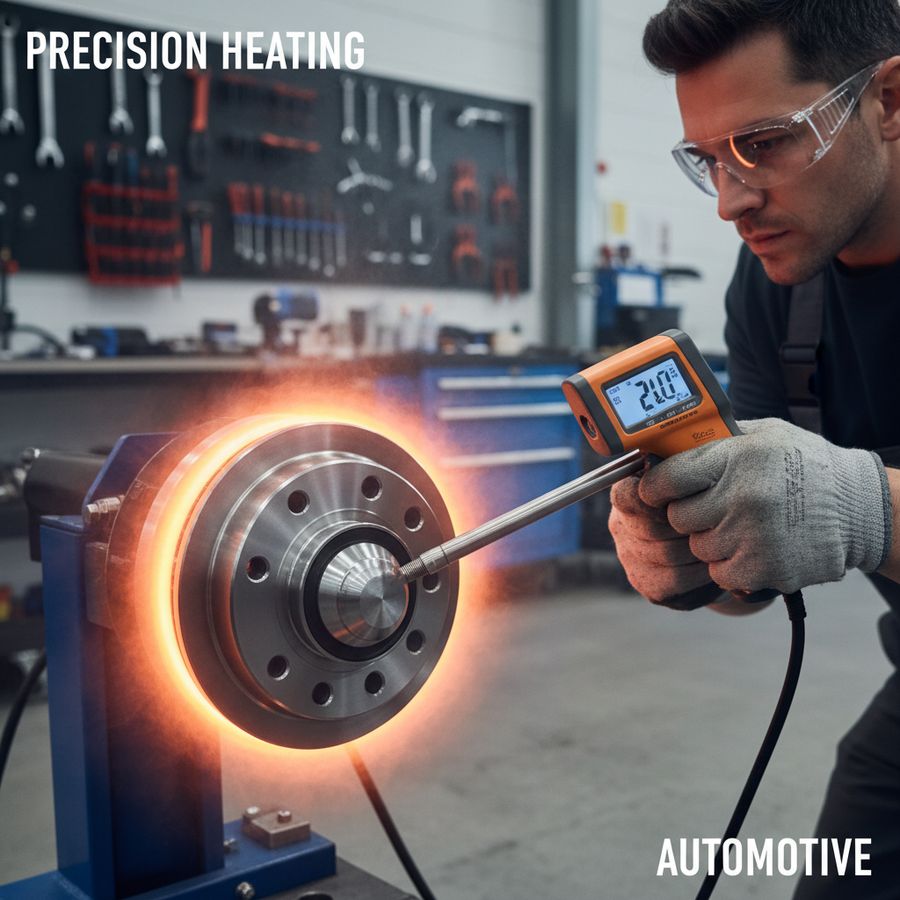
Heating hubs evenly to avoid warping
One of the critical advantages of induction heating in automotive repair is its ability to heat wheel hubs evenly to prevent warping and other forms of thermal damage. Uneven heating can cause metal to expand irregularly, leading to distortion, compromised fit, and ultimately, failure of the component upon reassembly.
To heat hubs evenly and avoid warping, consider the following best practices:
-
Use the correct induction heating coil size: The coil should match the hub's diameter and shape to ensure uniform magnetic field distribution and heat generation.
-
Apply controlled heating cycles: Gradual temperature ramp-up allows the metal to expand uniformly, reducing thermal stresses.
-
Rotate or reposition the hub if possible: This helps distribute heat evenly across the surface, especially for irregularly shaped parts.
-
Monitor temperature carefully: Use infrared thermometers or thermal cameras to ensure the hub does not exceed safe heating limits.
Induction heaters are designed to deliver consistent heating patterns, which makes them ideal for automotive repair tasks where precision is paramount. Unlike traditional methods that rely on flame or conduction, induction heating directly induces eddy currents within the metal, causing uniform internal heat generation rather than just surface warming.
"Even heating prevents component warping, preserving the structural integrity and fit of wheel hubs during removal and installation."
Failing to heat hubs evenly can cause permanent deformation, leading to difficult reinstallation or premature failure after repair. Therefore, operators must remain vigilant and adhere to proper induction heating procedures to maximize efficiency and maintain component quality.
In conclusion, induction heating offers a controlled, consistent, and safe way to heat wheel hubs evenly, which is essential to avoid warping and ensure a smooth wheel hub removal and replacement process in automotive repair.
Protecting ABS sensors and nearby seals
Wheel hubs and bearings are often located near sensitive components such as ABS sensors and seals that can be damaged by excessive heat during automotive repair. When using induction heating wheel bearing methods, it is crucial to protect these delicate parts to prevent costly repairs or safety compromises.
Key strategies for protecting ABS sensors and seals include:
-
Shielding sensors and seals: Use heat-resistant covers or shields to physically block heat from reaching sensitive areas.
-
Controlled heating duration and intensity: Apply induction heat only as long as necessary and at the lowest effective power setting.
-
Maintain distance: Position the induction coil to focus heat on the hub or bearing metal, minimizing exposure to surrounding components.
-
Cool-down breaks: Allow intermittent cooling periods during heating to prevent heat build-up near sensors or seals.
The precision of induction heating is a major advantage here. Because the heating is contactless and localized, there is far less risk of heat spreading uncontrollably compared to traditional flame applications. This reduces the chance of melting seals, damaging ABS sensor wiring, or causing sensor malfunctions that could affect vehicle safety systems.
"Proper protection of ABS sensors and nearby seals during induction heating preserves vehicle safety features and avoids additional repair costs."
Automotive repair professionals should always assess the layout of the wheel assembly before heating and take proactive steps to shield vulnerable parts. Combining induction heating with careful protection practices ensures that the benefits of fast, clean heating do not come at the expense of other critical components.
Ultimately, safeguarding ABS sensors and seals during induction heating not only maintains vehicle functionality but also enhances the overall efficiency and safety of the wheel hub removal process.
Time-saving methods for press-fit parts
Press-fit parts such as wheel bearings and hubs often present a significant challenge in automotive repair due to their tight mechanical interference fit. Induction heating offers a highly effective, time-saving method for loosening these parts by rapidly expanding the metal and reducing the interference fit without damaging the components.
Here are some time-saving techniques to optimize induction heating for press-fit parts:
-
Preheat strategically: Focus heat on the hub or bearing race to maximize expansion where it counts most.
-
Use portable induction heaters: Tools like the Alesco ACE12 provide powerful heating in a compact form, enabling quick setup and mobility around the workshop.
-
Combine heating with mechanical assistance: Apply heat while simultaneously using hydraulic presses or pullers to expedite removal.
-
Utilize proper heating tips: Specialized induction heating tips concentrate electromagnetic fields efficiently, reducing heating time.
Induction heating not only speeds up the removal of seized hubs but also minimizes the need for destructive force or prolonged manual labor. This results in faster turnaround times and reduced labor costs for automotive repair shops.
"Efficient induction heating of press-fit parts drastically cuts down repair times, enabling technicians to complete jobs faster and more safely."
Moreover, induction heaters are designed for durability and ease of use in harsh workshop environments, ensuring consistent performance over long periods. This reliability contributes directly to workflow optimization and customer satisfaction.
By integrating induction heating into standard repair procedures for press-fit wheel hubs and bearings, automotive professionals can achieve superior results with less effort, improving both productivity and component longevity.
Common mistakes when heating wheel hubs
While induction heating wheel bearing and hub removal is highly effective, improper use can cause damage or inefficiency. Automotive repair professionals should be aware of common mistakes to avoid to maximize the benefits of this technology.
Frequent errors include:
-
Overheating components: Excessive heat can warp metal, degrade bearing grease, or damage seals and sensors.
-
Uneven heating: Failing to evenly distribute heat may cause distortion or incomplete expansion.
-
Improper coil placement: Incorrect positioning reduces heating efficiency and may expose sensitive parts to heat unnecessarily.
-
Ignoring safety precautions: Not using protective gear or shields can lead to burns or equipment damage.
-
Using flame or open heat unnecessarily: This increases fire risk and can damage paint and components.
To avoid these mistakes, technicians should follow manufacturer guidelines for induction heater use, monitor temperatures carefully, and apply heat in controlled cycles. Additionally, preparation such as cleaning rust and debris from the hub surface before heating can improve heat transfer and reduce heating time.
"Understanding and avoiding common induction heating mistakes is key to safe, efficient, and damage-free wheel hub removal."
Proper training and experience with induction heaters are essential to harness their full potential. When used correctly, these tools offer unmatched advantages in automotive repair by providing fast, safe, and precise heating without the risks associated with traditional methods.
Ultimately, awareness and prevention of common errors help ensure that induction heating remains a trusted and effective solution for wheel hub and bearing maintenance.
Conclusion
Induction heating has emerged as a leading solution in automotive repair for the removal and servicing of wheel bearings and hubs. It offers a contactless, controlled, and efficient heating method that dramatically improves safety and productivity compared to traditional flame-based techniques.
By applying heat evenly, protecting sensitive components like ABS sensors and seals, and employing time-saving methods for press-fit parts, automotive professionals can tackle the challenges of seized hubs and bearings with confidence. This technology's precision minimizes the risk of warping, damage, and prolonged downtime, ultimately enhancing repair quality and customer satisfaction. To learn more about these innovative solutions, visit Induktion.
Key takeaways include:
-
Induction heating is a safe, clean, and environmentally friendly alternative to open flames.
-
Proper technique and equipment choice are critical to avoid damage and maximize efficiency.
-
Protecting nearby sensors and seals during heating preserves vehicle safety systems.
-
Induction heaters save significant time when working with press-fit or seized parts.
"Induction heating revolutionizes wheel hub removal by combining precision, safety, and speed, making it an indispensable tool in modern automotive repair."
For workshops seeking to upgrade their repair processes, investing in high-quality induction heaters such as the Alesco portable units ensures long-term reliability and excellent performance in demanding environments. Embracing this innovative heating solution helps mechanics achieve superior results while maintaining a safer and more productive workspace.


