
How induction heating lowers insurance costs for workshops
bis Mikael Rosvall auf Dec 12, 2025

Overview
Induction heating is rapidly revolutionizing the way workshops approach metal heating and repair tasks. Unlike traditional heating methods that rely on open flames or gas-powered equipment, induction heating utilizes electromagnetic fields to heat metals quickly, efficiently, and safely. This innovative technology is not only transforming operational workflows but also dramatically impacting insurance costs and workshop safety.
Workshops, especially those specializing in automotive repairs or heavy maintenance, face considerable risks due to the use of open flames or high-temperature gas tools. These risks often translate into higher insurance premiums as insurers factor in the potential for fires, burns, and other hazards. By adopting induction heating, workshops can mitigate these risks substantially, thereby reducing their insurance liabilities and operational costs.
Induction heating offers a cleaner, safer, and more environmentally friendly alternative by eliminating the need for gas or flames. This method heats metals precisely and contactlessly, minimizing the chance of accidental ignition or injury. As a result, workshop owners can experience tangible cost savings not only from improved efficiency but also in lowered insurance premiums.
“Switching to induction heating enables workshops to significantly reduce fire hazards and other safety risks, directly influencing lower insurance costs and enhancing overall workplace safety.”
In this article, we will explore how induction heating addresses typical insurance risks linked to traditional heating methods, demonstrate how it mitigates hazards, showcase real-world case studies on insurance savings, and provide actionable steps to implement induction heating technology in your workshop environment.
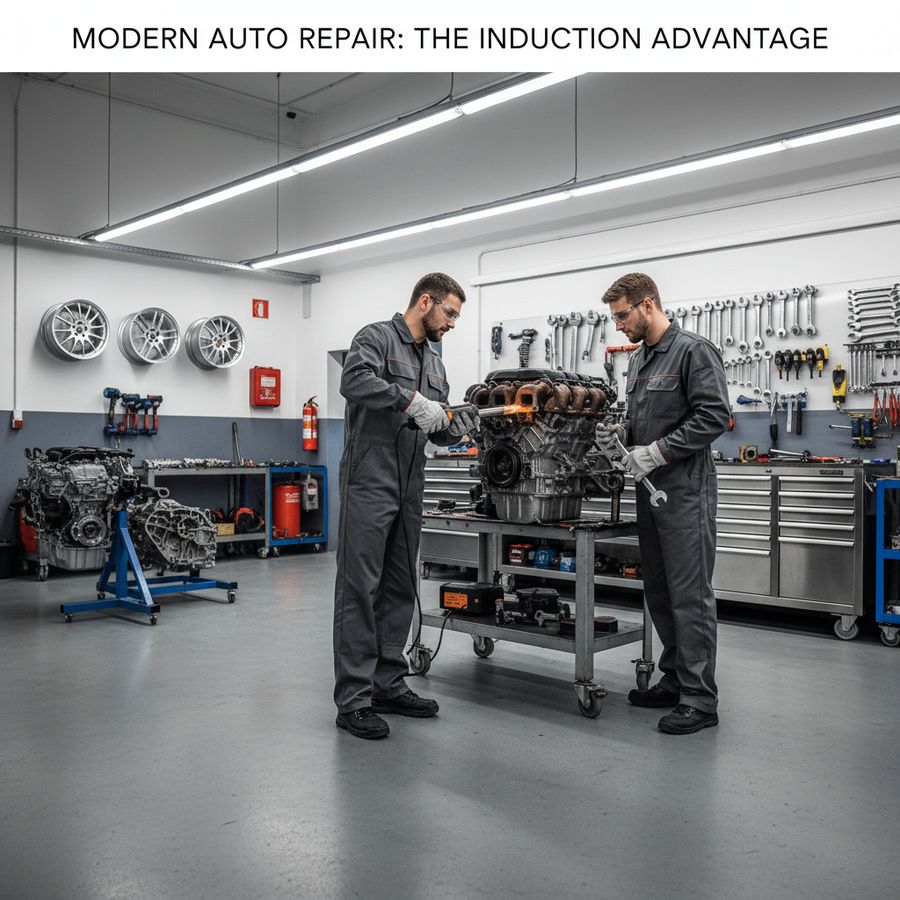
Insurance risks with traditional heating
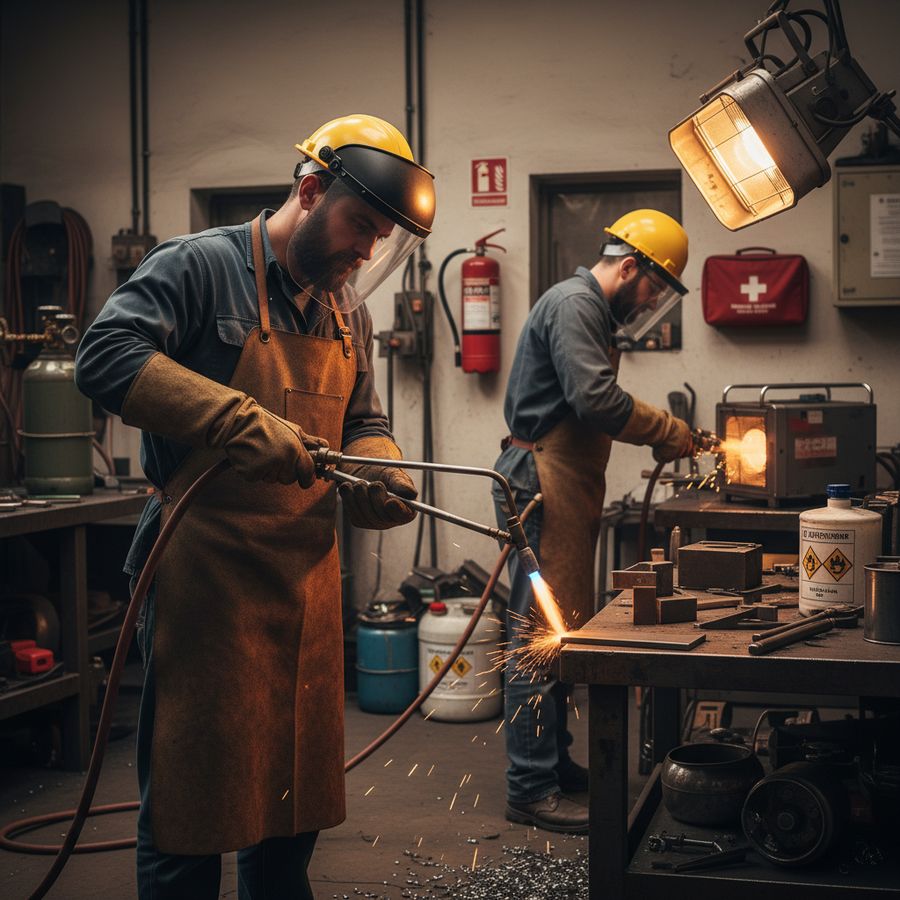
Traditional heating methods commonly employed in workshops involve the use of open flames, torches, or gas-powered heaters. These tools, while effective, come with a well-documented set of risks that insurance companies closely scrutinize when determining premiums. The primary concerns include fire hazards, burns, toxic fumes, and potential equipment damage.
Open flames and gas heaters increase the risk of accidental fires, especially in cluttered workshop environments where flammable materials like oils, solvents, or rags may be present. Insurance providers often categorize workshops using such equipment as high-risk due to the frequency and severity of fire-related claims in these settings.
Moreover, exposure to high temperatures and flames elevates the chance of workplace injuries, including burns and respiratory issues caused by fumes. These hazards not only compromise employee safety but also attract higher workers’ compensation insurance rates.
Another factor causing elevated insurance costs is the inefficiency and unpredictability of traditional heating methods. Uneven heating can lead to structural damage or failure in metal components, increasing repair costs and liability risks. This unpredictability contributes to a higher risk profile in the eyes of insurers.
-
Fire risk due to open flames and flammable materials
-
Burn injuries and occupational health hazards
-
Increased likelihood of equipment damage from uneven heating
-
Environmental concerns and regulatory compliance challenges
“Insurance companies often impose higher premiums on workshops using flame-based heating due to the elevated risk of fires and injuries.”
Understanding these risks is crucial for any workshop aiming to improve safety and reduce insurance expenditures. The limitations and dangers of traditional heating highlight the need for safer, more controlled alternatives such as induction heating.
How induction heating mitigates hazards
Induction heating fundamentally transforms the heating process by using electromagnetic currents to generate heat directly within the metal object. This contactless method eliminates the need for flames or combustible gases, significantly lowering the risk of fire and injury.
Because induction heating is highly localized and precisely controlled, it reduces the chance of overheating surrounding materials or causing accidental ignition. This control enhances workshop safety by preventing common hazards associated with traditional heating tools.
Key safety advantages of induction heating include:
-
No open flame: Eliminates fire hazards and lowers the risk of burns.
-
Contactless heating: Operators avoid direct contact with hot surfaces, reducing injury risk.
-
Rapid heating: Shorter heating times mean less exposure to high temperatures.
-
Reduced emissions: No gas combustion means cleaner air and fewer health hazards.
-
Precision application: Limits heat to specific parts, protecting adjacent materials and equipment.
Induction heating's ability to deliver heat quickly and safely not only improves operational efficiency but also minimizes the exposure to hazards that insurance companies consider when underwriting policies. This reduction in risks directly contributes to lower insurance costs for workshops.
“By drastically reducing fire and injury risks, induction heating offers workshops a safer alternative that aligns with insurers’ criteria for risk reduction.”
Furthermore, induction heating supports compliance with modern workplace safety regulations, making workshops more attractive to insurers and further enabling cost savings.
Case studies on insurance savings
Several workshops that have transitioned to induction heating report measurable reductions in their insurance premiums and claims. These case studies illustrate the tangible financial benefits of adopting this technology alongside its safety improvements.
For example, an automotive repair shop in Europe replaced its traditional gas torches with portable induction heaters. Within a year, the shop’s insurance provider recognized the reduced fire risk and workplace hazards, resulting in a 15% decrease in their insurance premiums. This translated into significant annual cost savings for the business.
In another instance, a heavy maintenance facility using induction heating for metal joint releases saw fewer workplace incidents and no fire-related claims for over two years. Their insurer rewarded this improved safety record with more favorable policy terms and reduced deductibles.
These case studies consistently show:
-
Lower frequency of fire and injury claims
-
Reduced insurance premiums and deductibles
-
Improved employee safety and morale
-
Enhanced operational efficiency and reduced downtime
“Workshops adopting induction heating can expect not only safer operations but also a direct impact on their insurance expenses.”
The positive correlation between induction heating adoption and insurance savings reinforces the value proposition of this technology for modern workshops aiming to optimize both safety and operational costs.
Workplace safety enhancements
Workshop safety is paramount, and induction heating contributes substantially to creating a safer working environment. By eliminating open flames and reducing hazardous emissions, induction heating minimizes many common safety concerns.
Employees benefit from reduced exposure to burns, toxic fumes, and fire risks. Additionally, the precise temperature control inherent to induction heating prevents overheating and structural damage to metal components, decreasing the likelihood of accidents caused by material failure.
Induction heating also supports ergonomic safety. Portable units are lightweight and easy to handle, reducing operator fatigue and risk of repetitive strain injuries. Enhanced cooling systems integrated into modern induction heaters allow for prolonged use without overheating, further protecting workers.
-
Elimination of flame-related hazards
-
Cleaner air quality with no gas combustion byproducts
-
Lower risk of burns and heat-related injuries
-
Reduced physical strain with ergonomic equipment design
-
Compliance with occupational health and safety standards
“Induction heating is a safer, cleaner, and more efficient heating solution that empowers workshops to enhance safety while reducing operational risks.”
By prioritizing induction heating, workshops not only protect their employees but also build a culture of safety that can positively influence insurance evaluations and premiums.
Steps to implement induction heating
Transitioning to induction heating requires thoughtful planning and execution to maximize benefits and ensure safety compliance. Here are key steps workshops should follow:
-
Assess needs: Identify the specific heating applications and challenges in your workshop where induction heating can be most effective.
-
Choose the right equipment: Select induction heaters that match your operational requirements, considering power output, portability, and heating tips.
-
Train staff: Provide comprehensive training on induction heater operation, safety protocols, and maintenance procedures.
-
Integrate safety measures: Update your safety policies to include induction heating best practices and emergency protocols.
-
Monitor performance: Track operational efficiency, safety incidents, and insurance feedback to evaluate the impact.
-
Engage insurers: Communicate improvements to your insurance provider to negotiate better premium rates based on reduced risks.
Implementing induction heating is a strategic investment that can yield long-term cost savings and safety improvements. Partnering with reputable suppliers who offer support and service ensures smooth adoption and sustained benefits.
“A well-planned induction heating implementation can transform workshop operations, enhance safety, and unlock insurance cost reductions.”
Workshops looking to modernize their heating processes should consider induction heating as a cornerstone technology for safer and more cost-effective operations.
Conclusion
The adoption of induction heating in workshops marks a significant leap forward for safer, cleaner, and more efficient metal heating processes. By removing open flames and gas usage, induction heating greatly minimizes workplace hazards, which in turn affects insurance costs by lowering risk assessments and premiums. To learn more about the benefits of induction heating, visit Induktion Store.Workshops that transition to induction heating benefit from enhanced workshop safety, reduced fire risks, fewer injuries, and improved environmental conditions. Real-world case studies validate the financial advantages, demonstrating tangible insurance savings and operational efficiencies.
For workshop owners and managers, embracing induction heating is not only a step toward innovation but also a strategic move to optimize safety, control costs, and build a resilient business. As insurance providers increasingly reward risk reduction, induction heating stands out as a proven solution to lower liabilities and improve bottom-line results.
“Induction heating is a transformative technology that lowers hazards, boosts safety, and reduces insurance costs — a triple benefit for modern workshops.”
Investing in induction heating today paves the way for a safer, more productive, and cost-efficient workshop future.


