

Overview
Choosing the right induction heating coil is essential for efficient and safe bolt removal and heating applications. Induction heating coils generate electromagnetic fields that heat metal parts quickly without direct contact, providing a cleaner and more controlled heating method compared to traditional open flames. This technology is widely used in automotive repair, industrial maintenance, and manufacturing processes where precision and safety are priorities.
The effectiveness of induction heating depends largely on coil selection. Selecting the appropriate coil ensures optimal heating speed, energy efficiency, and uniform heat distribution. A coil that is mismatched to the job can lead to inefficient heating, longer operation times, or even damage to the component being heated. Understanding the types of coils, their sizes, and how to position them will help technicians maximize performance and safety.
As industries move towards greener and safer solutions, induction heating coils offer a reliable alternative that reduces CO₂ emissions and workplace hazards. This guide will explore how coil types, sizes, and positioning influence heating speed and quality, along with practical tips for maintaining and replacing coils and connectors.
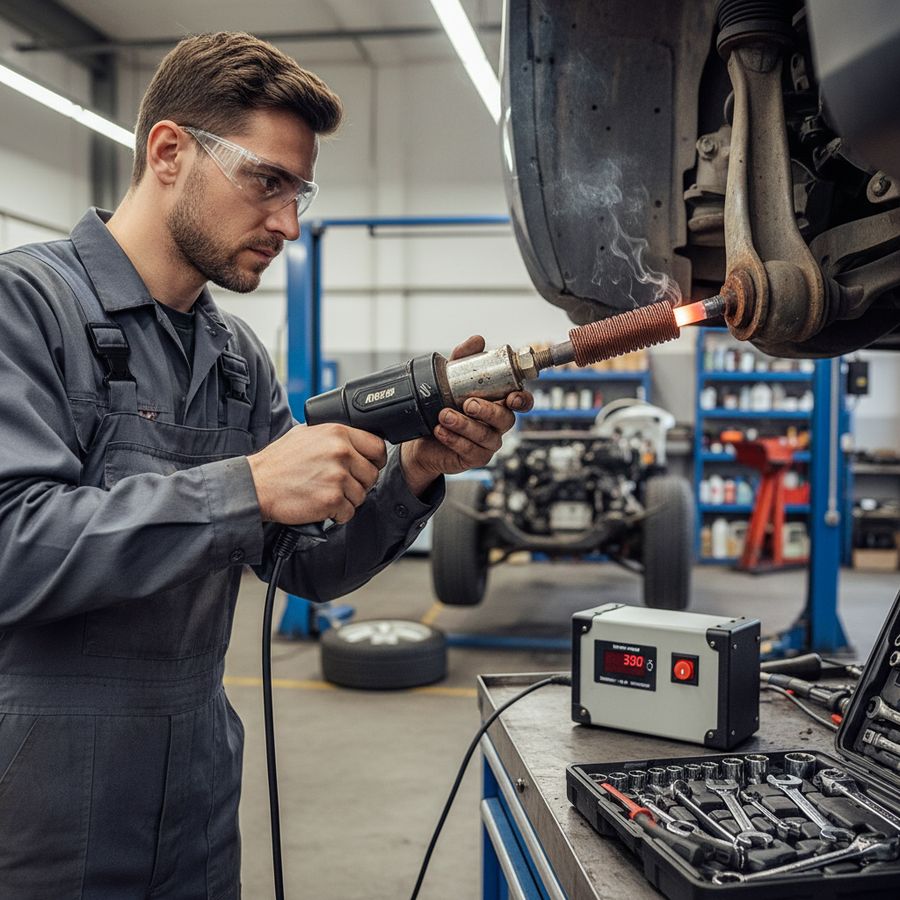
How induction coils affect heating speed
The heating speed in induction applications is directly influenced by the design and quality of the induction heating coil. Coils with the correct geometry and size concentrate electromagnetic energy efficiently, allowing quicker heat generation in the target metal. Conversely, improperly sized or shaped coils waste energy and slow down the heating process.
Factors affecting heating speed include:
- Coil diameter relative to the workpiece
- Number of coil turns
- Coil material and construction quality
- Power output of the induction heater
Using a coil that closely matches the size of the bolt or shaft ensures that the electromagnetic field is concentrated where it is needed most. This focused energy accelerates heating, reducing downtime during maintenance or repair jobs. Additionally, coils designed with optimized turns and spacing can achieve more uniform heating, preventing hotspots that could damage components.
“Proper coil selection is the key to unlocking faster, safer, and more energy-efficient induction heating.”
Coil types for bolts, nuts, and shafts
Different applications require specialized coil types to achieve effective heating. When dealing with bolt removal, nuts, or shafts, the coil shape and size must be tailored to the geometry of the part to ensure uniform heating and prevent damage.
Common coil types include:
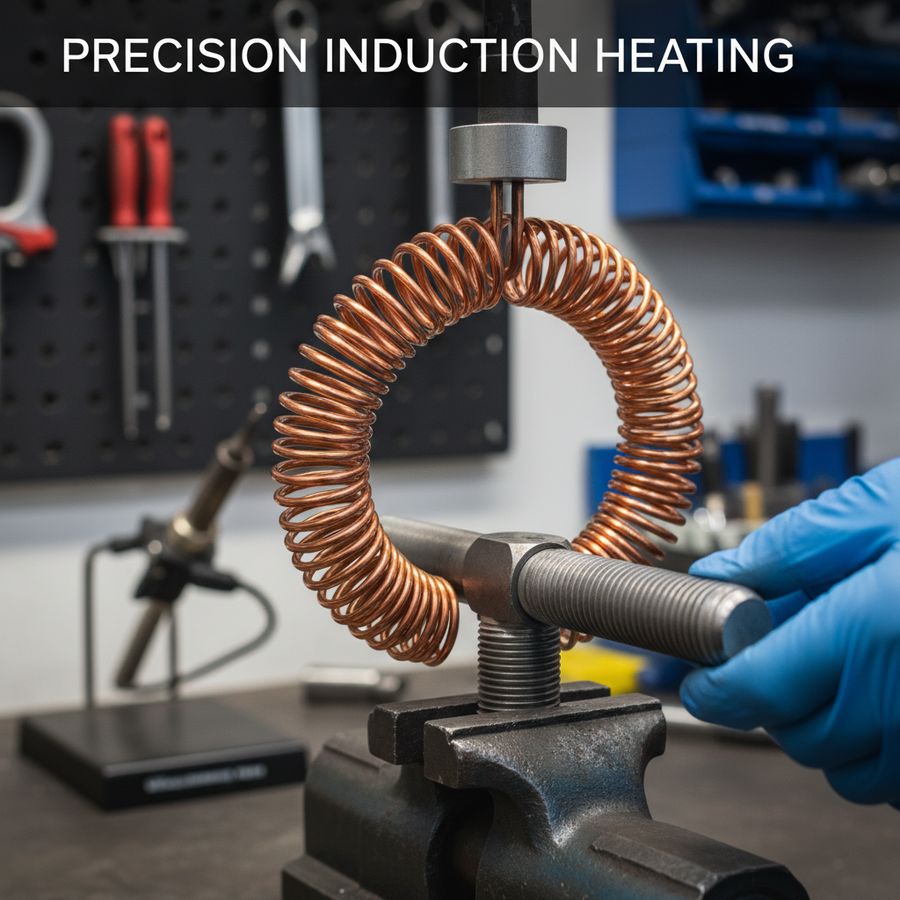
- Helical coils - Ideal for heating long shafts or bolts by wrapping around the part, delivering even heat along its length.
- Capacitor coils - Used for localized heating of nuts or flange areas, often shaped to fit snugly around the component.
- Flat or pancake coils - Suitable for heating flat surfaces or larger diameter parts where close proximity is needed.
Choosing the right coil type depends on the shape and size of the fastener or shaft. For example, a helical coil is preferred for bolts that require heat along the threading, while a flat coil may be better for heating a nut’s face. Proper coil design minimizes energy loss and speeds up the heating process.
Selecting coil size for tight engine bays
In automotive repair, especially in tight engine bays, selecting the correct coil size is critical for accessibility and safety. Space constraints often limit coil options, so choosing a compact yet effective coil is essential for reaching stubborn bolts or shafts without causing collateral damage.
A coil that is too large may not fit into cramped spaces, forcing technicians to risk damaging surrounding components or opting for less efficient heating methods. Conversely, a coil that is too small might not deliver sufficient heat quickly, leading to prolonged operation times.
Tips for coil size selection in tight spaces:
- Opt for slim-profile or specialized narrow coils designed for automotive use
- Choose coils with flexible leads or detachable parts to improve maneuverability
- Consider the curvature and shape of the coil to match the target area precisely
By carefully selecting the coil size, mechanics can achieve rapid and uniform heating even in confined spaces, accelerating bolt removal and reducing downtime.
Coil positioning tips for even heating
Correct coil positioning is vital to achieve uniform heating and maximize the efficiency of induction heating. Misaligned coils can cause uneven heat distribution, leading to hotspots, overheating, or incomplete heating of the target metal.
Key positioning tips include:
- Align the coil concentric to the bolt, nut, or shaft to ensure the electromagnetic field is evenly distributed
- Maintain consistent spacing between the coil and the workpiece, avoiding contact that could damage the coil or cause uneven heating
- Use coil holders or fixtures to stabilize the coil during heating, especially for longer or irregularly shaped parts
“Even heating is achieved not just by the right coil, but by how precisely it is positioned on the workpiece.”
Additionally, rotating the part or slightly adjusting the coil during heating can help disperse heat evenly and prevent localized damage.
When to replace coils and connectors
Induction heating coils and connectors are subjected to harsh operating conditions, including heat, vibration, and mechanical stress. Over time, this wear affects performance and safety. Knowing when to replace these components is crucial to maintain optimal heating speed and avoid equipment failure.
Signs that replacement is necessary:
- Visible wear or damage such as cracks, corrosion, or deformation on the coil
- Reduced heating efficiency or longer heating times despite correct coil selection
- Intermittent electrical connectivity or overheating connectors
- Physical damage to connectors, including bent pins or frayed cables
Regular inspection and preventive maintenance extend coil life and ensure safe operation. Using quality replacement parts designed for rugged environments, like those available at trusted suppliers, helps maintain the longevity and reliability of induction heating systems.
Conclusion
Choosing the right induction heating coil is fundamental to achieving efficient, safe, and fast heating for bolt removal and metalworking tasks. Understanding how coil type, size, and positioning influence heating speed empowers technicians to optimize their workflows and reduce downtime.
By selecting coils tailored to the specific application—whether heating bolts, nuts, or shafts—and considering space constraints like tight engine bays, professionals can enhance precision and safety. Regular maintenance and timely replacement of coils and connectors further ensure consistent performance and extend equipment lifespan.
Embracing induction heating technology not only improves operational efficiency but also supports a safer and more environmentally friendly work environment, making it a smart choice for modern industrial and automotive maintenance.


