
Cost comparison: induction heaters vs traditional flame heating
by Mikael Rosvall on Feb 10, 2026

Overview
Induction heaters and traditional flame heating are two prevalent methods used in industrial and automotive workshops for heating metals, loosening mechanical joints, and preparing parts for welding or assembly. Each technology has distinct characteristics that affect cost, safety, efficiency, and long-term financial implications. Understanding these differences is critical for businesses aiming to optimize operational workflows while managing expenses effectively.
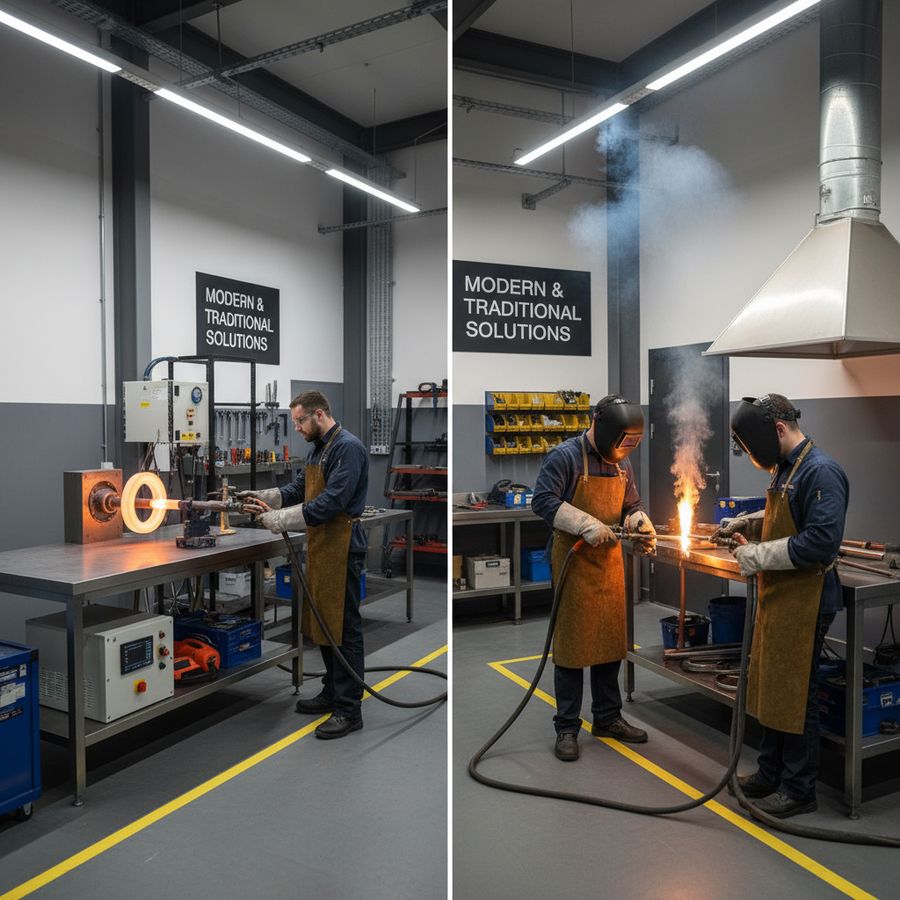
Traditional flame heating relies on open flames fueled by gas or propane to generate heat. This method has been widely used due to its simplicity and relatively low upfront costs. However, flame heating carries inherent risks such as fire hazards, uneven heat distribution, and environmental concerns tied to CO₂ emissions. In contrast, induction heating uses electromagnetic fields to induce heat directly within the metal, offering a contactless, flame-free heating process. This modern technology is gaining traction for its precision, safety advantages, and environmental benefits.
Cost comparison between induction heaters and flame heating is multifaceted, involving initial capital outlay, ongoing operational expenses, maintenance, safety considerations, and insurance-related costs. While induction heaters typically require a higher initial investment, they often deliver significant savings over time through reduced fuel consumption, lower maintenance requirements, and improved workplace safety.
“Upgrading to induction heating not only improves operational efficiency but also contributes to a safer and greener workshop environment.”
In this article, we will explore these factors in detail to help workshop owners and industrial operators make informed decisions that align with both their budget and safety priorities.
Initial investment costs
The initial investment costs for induction heaters are generally higher than those for traditional flame heating equipment. Induction heaters, such as portable models like the ALESCO ACE12 or INTER 8/12, are precision-engineered tools built with durable components designed to withstand harsh industrial environments. Prices for these units range from approximately €2,950 for entry-level models up to €13,500 for higher-capacity, feature-rich systems.
Conversely, flame heating tools, including torches and burners, usually have a lower upfront cost, often available for a few hundred euros depending on the brand and specifications. This lower purchase price can be appealing to small workshops or those with limited capital budgets.
However, it is important to consider not only the purchase price but also the quality and longevity of the equipment. Induction heaters are designed for longevity and consistent performance, potentially reducing the need for frequent replacements. Additionally, induction systems often come with integrated cooling systems, which enhance durability and operational uptime.
Investing in induction heaters may require a larger initial budget, but this cost is often offset by long-term savings and operational advantages.
“A well-chosen induction heating unit is an investment in reliability, safety, and efficiency that pays dividends over its lifespan.”
When comparing initial costs, businesses should evaluate the total value proposition rather than focusing solely on the sticker price. Equipment that minimizes downtime and enhances productivity can justify a higher upfront expense.
Operational expenses
Operational expenses are a critical factor when comparing induction heaters and traditional flame heating. Induction heaters consume electricity to generate heat, which can be more cost-effective and environmentally friendly compared to the fuel required for flame heating.
Flame heating depends on propane, butane, or similar gaseous fuels, which not only incur continuous purchase costs but also fluctuate in price due to market conditions. Additionally, fuel combustion produces CO₂ emissions, which may attract regulatory or carbon-related costs in certain regions. In contrast, induction heaters rely on electric power, and many businesses can benefit from cleaner, more stable energy pricing especially if sourced from renewable energy providers.
Moreover, induction heating is highly efficient because heat is generated directly within the metal, reducing wasted energy and heating times. This efficiency translates into lower electricity consumption per heating cycle compared to the fuel consumption of an open flame.
-
Electricity tends to be more stable and predictable in cost compared to gaseous fuels.
-
Induction heaters reduce CO₂ emissions, aligning with green initiatives.
-
Faster heating cycles with induction heating improve workflow and reduce labor costs.
Operational expenses for induction heaters are typically lower over time due to efficiency and fuel cost savings. This makes induction heating a smart choice for workshops aiming to reduce ongoing expenses while maintaining effective heating solutions.
Safety and insurance implications
Safety considerations are paramount when comparing induction heaters and flame heating. Traditional flame heating involves open flames and combustible gases, which pose significant risks of fire, explosion, and burns. These hazards require rigorous safety protocols, special ventilation, and sometimes limit usage in confined or sensitive environments.
Induction heaters, by contrast, operate without an open flame or direct combustion. This contactless heating method greatly reduces fire risks and improves overall workshop safety. The absence of gas eliminates concerns related to leaks or fuel storage, which can be costly and complicated to manage.
From an insurance perspective, workshops using induction heaters often benefit from reduced premiums due to the lower risk profile. Insurance providers recognize that flame-free processes minimize the likelihood of accidents, property damage, and associated liabilities.
“No gas + no flames = significantly lower risk and reduced insurance costs.”
Investing in induction heating technology can therefore lead to substantial savings on workshop safety costs and insurance premiums. This financial benefit complements the direct operational savings and supports a safer working environment for staff.

Maintenance and repairs
Maintenance costs are another important element in the cost comparison. Flame heating equipment, while simple, requires regular inspection of burners, hoses, and fuel tanks to ensure safe operation. Components are subject to wear and tear and may require frequent replacements or repairs, especially if used intensively.
Induction heaters are engineered with robust components designed for heavy-duty use in industrial environments. They typically include cooling systems to prevent overheating and extend the lifespan of critical parts. Maintenance tends to be less frequent and often involves electronic diagnostics and component servicing rather than mechanical repairs.
This durability translates into lower maintenance costs over the equipment’s lifetime. Additionally, induction heaters avoid the soot, residue, and corrosion issues common with flame heating, which can degrade equipment performance and safety.
-
Induction heaters have fewer consumable parts exposed to harsh conditions.
-
Regular preventive maintenance is generally simpler and less costly.
-
Reduced downtime due to fewer repairs improves operational continuity.
Choosing induction heating can minimize maintenance burdens and repair expenses, contributing to better cost control and reliability in demanding workshop settings.
Long-term financial benefits
While the upfront cost of induction heaters may exceed that of traditional flame heating tools, the long-term financial benefits often outweigh the initial investment. These benefits arise from several key factors:
-
Lower operational expenses: Reduced fuel consumption and enhanced energy efficiency save money continuously.
-
Improved safety: Lower insurance premiums and fewer accident-related costs contribute to financial stability.
-
Reduced maintenance: Fewer repairs and longer equipment life reduce unplanned expenditures.
-
Increased productivity: Faster heating times and cleaner processes enhance workflow and reduce labor costs.
-
Environmental compliance: Induction heating’s carbon-neutral benefits may qualify businesses for green incentives or tax breaks.
Induction heaters represent a strategic investment that delivers cost savings, operational efficiencies, and a safer workplace over time. Businesses transitioning to induction heating technologies position themselves for greater competitiveness and sustainability in an evolving industrial landscape.
“Switching to induction heating is a forward-thinking decision that pays off through enhanced efficiency, safety, and financial performance.”
Conclusion
In summary, the comparison between induction heaters and traditional flame heating reveals significant differences in cost structure, safety, and operational impact. While flame heating equipment is attractive for its low initial cost, the ongoing expenses, safety risks, and maintenance demands can add up substantially over time.
Induction heating presents an attractive option, featuring a higher upfront cost offset by lower operational expenses, increased safety, reduced maintenance, and enhanced productivity. Workshops that implement induction heaters enjoy a cleaner, safer environment, minimized insurance liabilities, and long-term financial benefits. Discover more about how induction heating can transform your workshop here.
For businesses focused on optimizing costs while prioritizing safety and efficiency, induction heaters represent a superior heating solution. By investing in this modern technology, companies can future-proof their operations and contribute to a greener, more sustainable industrial future.


