

Overview
Preheating before welding is a critical process step that significantly influences the quality, strength, and durability of welded joints. It involves raising the temperature of the base metal before welding begins to reduce thermal stresses and prevent weld defects. Among various preheating methods, induction heating has gained popularity due to its efficiency, safety, and environmental benefits.
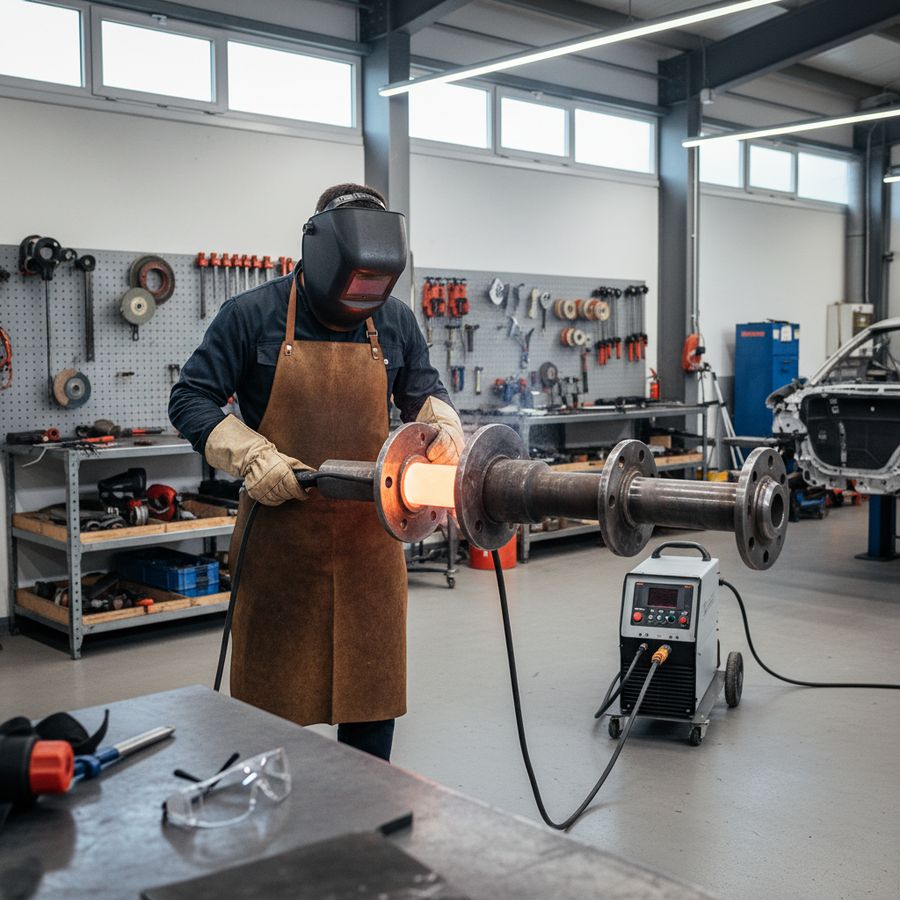
Induction heating works by generating an electromagnetic field that induces eddy currents within the metal, causing rapid and uniform heating without direct contact or open flames. This method allows precise control over the welding temperature and heating zones, which is essential for consistent weld quality. Induction preheating is widely used in automotive repair, heavy maintenance, and industrial fabrication, as it minimizes risks associated with traditional heating methods and reduces operational downtime.
Understanding the basics of induction heating provides welders and maintenance professionals with the tools to achieve superior weld integrity. By controlling the heat input and distribution, induction preheating helps to manage metallurgical transformations in the steel and reduce residual stresses that often lead to weld cracking. This method is especially advantageous when working with high-strength or alloyed steels that are sensitive to rapid cooling.
“Induction heating offers a cleaner, safer, and more energy-efficient alternative to open flames, delivering consistent preheat temperatures critical for high-quality welding.”
In summary, induction preheating stands out as a modern solution for preheating before welding, enhancing weld quality, safety, and productivity across various metalworking applications.
Why preheating improves weld quality
Preheating before welding significantly improves weld quality by stabilizing the thermal environment of the base metal. When metal is welded without proper preheating, the rapid temperature change can cause excessive thermal stresses, leading to cracks, distortion, and poor fusion. Preheating raises the metal temperature uniformly, reducing the temperature gradient between the weld zone and the surrounding material.
This controlled heat input slows down the cooling rate of the weld, which is essential for the formation of desirable microstructures within the weld metal and heat-affected zone (HAZ). For steels, this means reducing the formation of hard and brittle martensitic structures that are prone to cracking. As a result, preheated welds demonstrate enhanced toughness, ductility, and resistance to weld cracking.
Additional benefits of preheating include:
-
Improved weld penetration and fusion by maintaining a stable molten weld pool.
-
Reduced hydrogen diffusion rates, lowering the risk of hydrogen-induced cracking.
-
Minimized residual stresses and distortion, leading to better dimensional accuracy.
-
Enhanced ability to weld thicker materials or complex assemblies without defects.
Preheating also supports safer welding conditions by reducing the need for excessive heat input during welding passes, which can otherwise degrade the mechanical properties of the metal. By optimizing the welding temperature before work begins, welders can achieve stronger and more reliable joints that withstand service conditions.
“A well-executed preheat process is the foundation for weld quality, acting as a preventive measure against cracking and mechanical failures.”
Induction preheating vs gas torch methods
When it comes to preheating before welding, two commonly used methods are induction preheating and traditional gas torch heating. Both have their applications, but induction heating offers distinct advantages that make it preferable in many industrial and automotive repair settings.
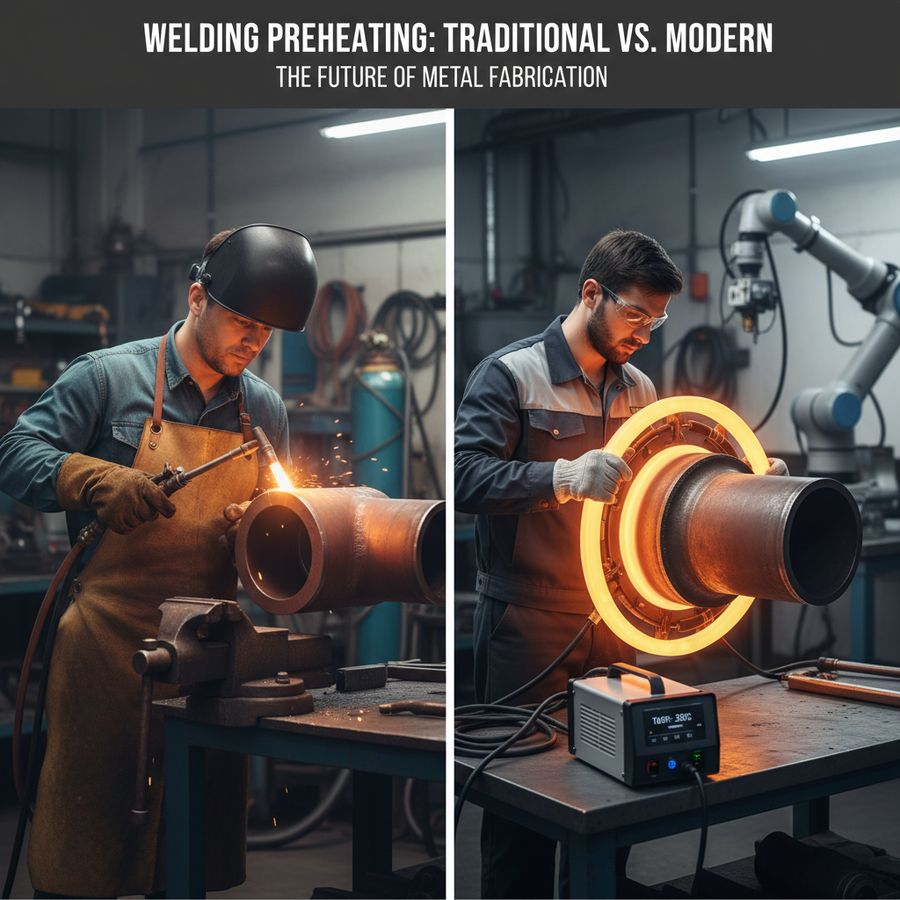
Gas torch preheating involves direct flame application to the workpiece, which can be uneven and difficult to control precisely. Open flames pose safety hazards such as fire risk and harmful emissions, and the heating process can be slower and less efficient. Additionally, heat loss to the surrounding environment is significant, leading to increased energy consumption and inconsistent weld temperatures.
Induction preheating, on the other hand, uses electromagnetic fields to heat the metal internally, resulting in rapid, uniform, and controlled heating. This method is flame-free, reducing risks to personnel and the work environment. Induction heating also allows targeted heating of specific weld zones without affecting the entire component, which is highly beneficial for complex assemblies.
-
Efficiency: Induction heating heats up faster and wastes less energy compared to gas torches.
-
Safety: Eliminates open flame hazards and reduces CO₂ emissions.
-
Precision: Offers accurate temperature control to avoid overheating or underheating.
-
Environmental impact: Induction heating is carbon neutral, supporting greener welding practices.
In contexts like automotive repairs or heavy maintenance, where time, safety, and weld quality are critical, induction preheating is a superior choice. It not only improves operational efficiency but also contributes to a safer and more sustainable workplace.
“Switching to induction preheating can revolutionize your welding processes by enhancing safety, reducing emissions, and delivering consistent heat quality.”
Target temperatures and how to monitor them
Achieving the correct welding temperature during preheating is essential for preventing weld cracking and ensuring optimal metallurgical properties. Target temperatures vary depending on the steel grade, thickness, and welding method, but generally range from 100°C to over 300°C for carbon and low-alloy steels.
For example, mild steels typically require preheat temperatures between 100°C and 150°C, while high-strength or alloy steels may need temperatures up to 250-300°C to minimize residual stresses and hydrogen embrittlement risks. Specialized steels with higher carbon content or complex chemistries often demand customized preheat regimes to avoid weld defects.
Monitoring preheat temperatures accurately is crucial to maintaining consistent weld quality. Common methods include:
-
Infrared (IR) thermometers: Provide non-contact, instantaneous temperature readings suitable for quick checks.
-
Thermocouples: Attached directly to the workpiece to provide continuous temperature monitoring during heating and welding.
-
Thermal imaging cameras: Offer visual temperature distribution maps, useful for quality control and process optimization.
Using induction preheating equipment with built-in temperature control features can automate the process, ensuring the metal reaches and maintains the target temperature before welding begins. This precise control reduces the risk of overheating, which can degrade metal properties, or underheating, which leads to cracking.
“Accurate temperature monitoring during preheating is the key to consistent weld quality and preventing costly rework.”
Incorporating reliable temperature measurement tools into your welding setup enhances process control and results in stronger, crack-resistant welds.
Reducing cracking and improving penetration
Weld cracking is one of the most common and costly problems in welding, often caused by rapid cooling, high residual stresses, or hydrogen presence within the weld metal. Effective preheating, particularly through induction heating, plays a vital role in reducing these issues by stabilizing the weld environment.
By raising the base metal temperature before welding, preheating slows down the cooling rate, allowing hydrogen to diffuse out of the weld zone and avoiding the formation of brittle microstructures prone to cracking. Additionally, the reduced thermal gradient lowers residual stresses that can initiate cracks during or after welding. This leads to improved weld toughness and service life.
Improved weld penetration is another benefit of controlled preheating. When the base metal is at an elevated temperature, the molten weld pool flows more easily and fuses better with the parent metal. This results in deeper weld penetration, stronger joints, and fewer defects such as lack of fusion or porosity.
Induction preheating offers the advantage of uniform heat distribution, which ensures consistent penetration across the entire weld area. Unlike flame heating, which can create hot spots or uneven temperature profiles, induction heating maintains steady and controlled heat input, enhancing weld integrity.
“Preheating with induction is a proven technique to minimize weld cracking and achieve superior penetration, ensuring durable and reliable joints.”
For welders focused on quality and longevity, incorporating induction preheating is a strategic step to reduce defects and improve overall weld performance.
Preheat procedures for common steel grades
Different steel grades require specific preheat procedures to accommodate their unique chemical compositions and mechanical properties. Understanding these requirements is essential to optimize welding temperature and avoid weld cracking or other defects.
Carbon steels: Typically require preheat temperatures between 100°C and 150°C, depending on thickness and carbon equivalent. Lower carbon steels often need minimal preheating, while higher carbon content increases the risk of martensitic formation and cracking, necessitating more thorough preheating.
Low-alloy steels: Such as ASTM A516 or AISI 4140, generally require preheating between 150°C and 250°C. These steels are more sensitive to thermal stresses and hydrogen embrittlement, so controlled induction preheating is highly recommended.
High-strength and alloy steels: Including quenched and tempered grades, may require preheat temperatures up to 300°C or higher to prevent cracking and ensure proper metallurgical transformation. Induction heating’s precise temperature control is ideal for these sensitive materials.
-
Follow the specific welding procedure specification (WPS) for recommended preheat temperatures and durations.
-
Use induction heating equipment capable of uniform heating and reliable temperature monitoring.
-
Maintain the preheat temperature throughout welding and apply controlled interpass temperatures as specified.
Adhering to proper preheat procedures tailored for each steel grade enhances weld quality, reduces rework, and extends the service life of welded components.
“Matching preheat protocols to steel grade and thickness is essential for preventing weld cracking and achieving optimal weld performance.”
Post-weld heating and stress considerations
While preheating before welding is vital, post-weld heating—also known as post-weld heat treatment (PWHT)—plays an equally important role in managing residual stresses and improving weld quality. PWHT involves controlled heating of the welded assembly after welding to relieve stresses, reduce hardness, and improve toughness.
Residual stresses develop due to uneven cooling and contraction of the weld and surrounding metal. If left unmanaged, these stresses can cause cracking, distortion, and premature failure in service. Post-weld heating helps to redistribute and reduce these stresses, enhancing the structural integrity of the weld.
Induction heating is particularly suited for PWHT because it allows localized, controlled heating without heating the entire assembly. This precise approach saves energy, reduces cycle times, and minimizes thermal distortion.
Key considerations for post-weld heating include:
-
Maintaining appropriate temperature ranges as specified by welding codes and material standards.
-
Controlling heating and cooling rates to avoid introducing new stresses or metallurgical issues.
-
Using accurate temperature monitoring tools to ensure uniform heat distribution.
Combining induction preheating with effective post-weld heating results in a comprehensive thermal management strategy that minimizes weld cracking and maximizes joint performance.
“Post-weld heat treatment complements induction preheating by relieving residual stresses, ensuring stronger, crack-resistant welds.”
Conclusion
Preheating before welding is an essential practice that significantly enhances weld quality, reduces weld cracking, and improves mechanical properties. Induction heating stands out as a modern, efficient, and environmentally friendly preheating method that offers precise temperature control, safety, and operational advantages over traditional flame-based techniques.
By understanding the target welding temperatures, appropriate preheat procedures for various steel grades, and the significance of post-weld heating, professionals can enhance their welding processes to achieve durable, high-integrity joints. This knowledge leads to a reduction in welding defects, improved penetration, and minimized residual stresses, contributing to longer-lasting welds and lower maintenance costs. For more insights, check out Induktion.
For automotive repair, heavy maintenance, and industrial applications, investing in induction preheating technology delivers a safer workplace, lower operational costs, and superior welding results. Embracing induction heating as part of your welding workflow is a forward-thinking step toward excellence in metal joining.
“Adopting induction preheating transforms welding processes by enhancing quality, safety, and sustainability for modern metal fabrication.”


