
Heat alignment in heavy maintenance: practical guide
bis Mikael Rosvall auf Feb 10, 2026

Overview
Heat alignment plays a crucial role in the realm of heavy maintenance, offering an efficient and precise method to adjust metal components through controlled heating processes. In industries where large machinery and structural components require regular upkeep, ensuring proper alignment is essential to maintain operational integrity and safety. Traditional methods often involve mechanical adjustments or the use of open flames, which can be hazardous and less precise. In contrast, heat alignment, particularly using induction heating, provides a safer, cleaner, and more controlled alternative.
Induction heating technology has revolutionized how technicians approach metal expansion and alignment tasks. By applying electromagnetic fields, metals can be heated rapidly and uniformly without direct contact, minimizing risks of overheating or damage. This method’s efficiency not only reduces downtime but also lowers operational costs and enhances workplace safety by eliminating the need for open flames or gas-based heating sources.
Within heavy maintenance contexts, heat alignment facilitates the correction of misalignments in shafts, bearings, and other metal assemblies that are subject to wear, deformation, or installation inaccuracies. The process relies on the principle of controlled metal expansion to achieve desired tolerances, allowing components to shift into precise positions before cooling and setting firmly. This approach ensures longevity and reliability of critical equipment components.
Heat alignment is widely regarded as a best practice in sectors ranging from automotive repair and heavy machinery maintenance to industrial manufacturing and infrastructure upkeep. The integration of induction heating tools, such as portable induction heaters, further empowers technicians to perform onsite repairs and adjustments with flexibility and high accuracy. As industries continue to prioritize safety, environmental responsibility, and cost-effectiveness, induction heating for heat alignment stands out as a forward-looking solution.
“Induction heating contributes to a better working environment for your staff — no gas, safer processes, and a significant reduction in CO₂ emissions.”
What heat alignment is and why it matters
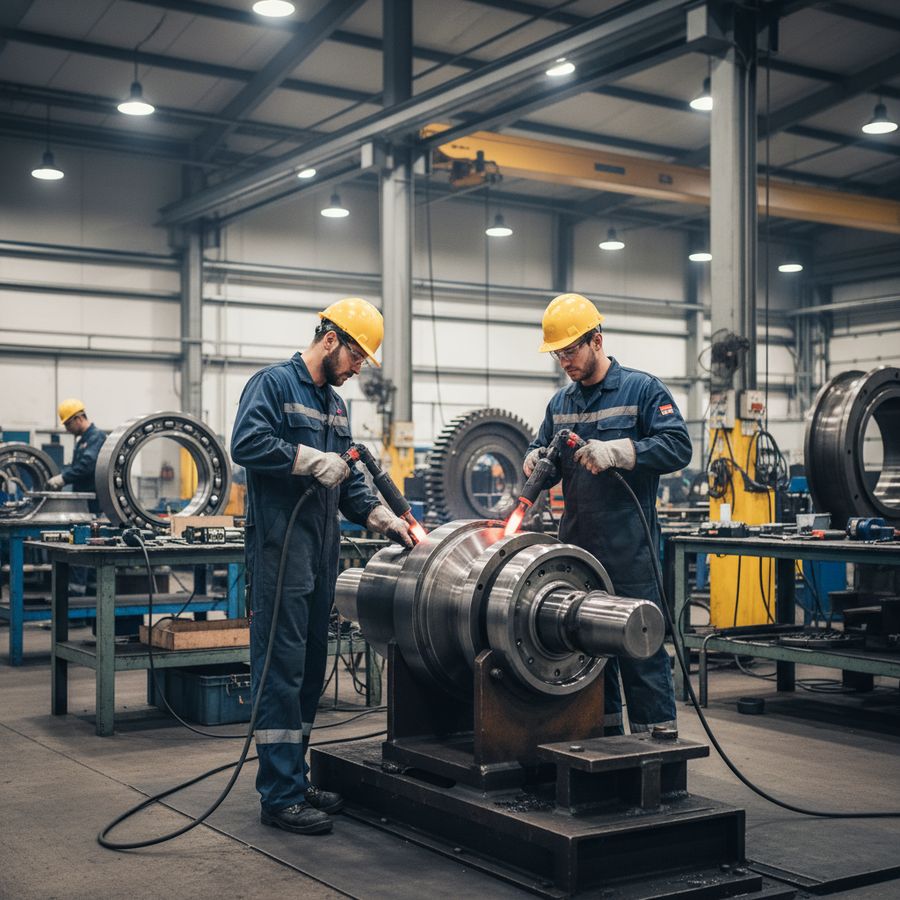
Heat alignment is a maintenance technique that utilizes thermal expansion to correct misalignments in metal components, particularly in heavy machinery and structural assemblies. By applying controlled heat, the metal expands predictably, allowing precise positional adjustments before it cools and contracts to a stable, aligned state. This process is invaluable for maintaining the mechanical accuracy and operational efficiency of complex equipment.
Misalignments in heavy equipment can cause excessive wear, vibrations, and premature failure of components such as shafts, bearings, gears, and couplings. Therefore, ensuring proper alignment directly influences machine longevity and performance. Heat alignment provides an effective and repeatable solution for these challenges by leveraging the physical properties of metals under heat.
Traditional alignment techniques often involve mechanical force or open-flame heating, which carry risks such as uneven heating, warping, or even structural damage. Heat alignment with induction heating, however, offers controlled heating that minimizes these risks. The precision and safety inherent to this method make it indispensable in heavy maintenance routines.
Why it matters:
-
Enhanced accuracy: Controlled thermal expansion allows for precise realignment of components.
-
Reduced downtime: Faster heating and alignment speeds up maintenance cycles.
-
Improved safety: Contactless induction heating eliminates open flames and gas hazards.
-
Cost efficiency: Prevents costly equipment failures by maintaining proper alignment.
-
Environmental benefits: Reduces CO₂ emissions compared to traditional heating methods.
Ultimately, heat alignment is a cornerstone technique in heavy maintenance, ensuring machines operate smoothly, safely, and efficiently while extending their service life.
Induction heating for controlled metal expansion
Induction heating is an advanced technology that uses electromagnetic fields to generate heat inside conductive materials, making it ideal for controlled metal expansion. Unlike traditional heating methods that rely on direct contact or open flames, induction heating is contactless and highly precise, offering significant advantages in heavy maintenance contexts.
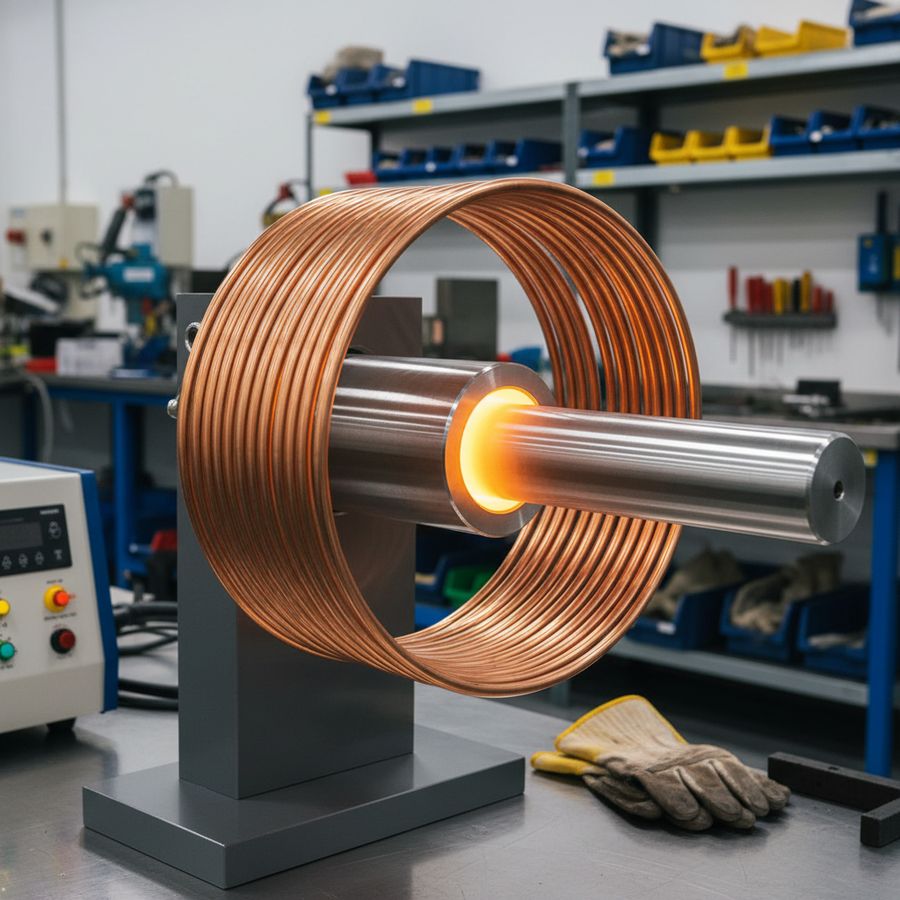
The principle behind induction heating involves inducing eddy currents within the metal, which rapidly raise its temperature from the inside out. This localized heating allows technicians to target specific areas requiring expansion without affecting surrounding components. The precision of induction heating ensures metals expand uniformly, reducing the risk of thermal stresses or distortions that could compromise structural integrity.
Key benefits of using induction heating for heat alignment include:
-
Rapid heating: Achieves desired temperatures quickly, reducing maintenance time.
-
Energy efficiency: Focuses heat generation only where needed, minimizing energy waste.
-
Improved safety: Eliminates hazards associated with open flames and gas combustion.
-
Environmental friendliness: Induction heating is 100% carbon neutral since it requires no gas.
-
Versatility: Works effectively on various metal types and complex geometries.
Portable induction heaters, such as those offered by specialized suppliers, empower maintenance teams to perform controlled heating onsite with ease. These devices often include integrated cooling systems to support extended use without overheating, ensuring consistent performance.
“Induction heating is dramatically safer than open flames and still cuts through stuck joints effortlessly.”
By integrating induction heating into heat alignment procedures, heavy maintenance operations achieve higher precision, safety, and sustainability—key factors in modern industrial environments.
Typical applications in heavy maintenance work
In the field of heavy maintenance, heat alignment using induction heating finds numerous practical applications. Its ability to precisely control metal expansion makes it invaluable for tasks where mechanical parts must be realigned or loosened without damage. Below are some of the most common scenarios where heat alignment is applied:
-
Aligning shafts and couplings: Misaligned shafts cause vibrations and wear; heat alignment corrects these issues efficiently.
-
Releasing seized bolts and joints: Controlled heating expands metal parts to break corrosion bonds, easing disassembly.
-
Pre- and post-weld heating: Induction heating minimizes thermal stresses during welding processes, reducing deformation.
-
Adjusting bearing fits: Heat alignment allows bearings to be installed or removed easily by expanding or contracting metal housings.
-
Repairing structural components: Large metal frames or assemblies can be realigned after damage or deformation.
These applications are critical in industries such as automotive repair, heavy machinery manufacturing, shipbuilding, and infrastructure maintenance. The use of induction heating tools enhances the speed, safety, and quality of these maintenance activities.
Example: In automotive repair shops, technicians use portable induction heaters to quickly heat axles or wheel hubs, facilitating easier removal or alignment without risking damage to surrounding components. This ensures faster turnaround and reduces labor costs.
Overall, heat alignment and induction heating serve as indispensable techniques for maintaining the precision and functionality of heavy equipment, enabling industries to uphold safety standards and operational excellence.
Measuring alignment before and after heating
Accurate measurement of alignment is fundamental to the success of any heat alignment procedure in heavy maintenance. Proper assessment before and after heating ensures that the desired positional corrections have been achieved and that components meet operational tolerances.
Before heating, technicians typically perform baseline measurements using tools such as dial indicators, laser alignment systems, or micrometers. These measurements identify the extent and direction of misalignment, guiding the heating process to target specific areas for expansion.
After applying controlled heating, components are allowed to cool and stabilize. Subsequently, the alignment is rechecked using the same measurement instruments to confirm the effectiveness of the heat alignment. This verification step is critical to avoid costly rework or equipment failure due to residual misalignment.
Best practices for measuring alignment include:
-
Use precise and calibrated measurement tools to ensure accuracy.
-
Record all measurements systematically for documentation and repeatability.
-
Perform measurements at multiple points to capture comprehensive alignment data.
-
Consider thermal expansion effects when interpreting pre-heating measurements.
-
Allow sufficient cooling time before post-heating measurements to avoid thermal distortion.
Integrating meticulous measurement protocols with induction heating-driven heat alignment maximizes the reliability and quality of maintenance work. This combination supports ongoing equipment performance and extends service life.
Avoiding overheating and metal weakening
One of the paramount concerns during heat alignment is preventing overheating that can lead to metal weakening or damage. Controlled heating is essential to preserve the mechanical properties and structural integrity of metal components.
Overheating can cause undesirable metallurgical changes such as grain growth, loss of hardness, or even warping. These effects compromise the strength and durability of the material, potentially resulting in premature failure once the component returns to service.
To avoid these issues, technicians must adhere to strict temperature controls during induction heating, often using temperature sensors or thermal imaging devices to monitor the process in real-time. Additionally, induction heaters with integrated cooling systems help regulate heat input and prevent excessive temperature build-up.
Key strategies to avoid overheating include:
-
Set precise temperature limits based on material specifications.
-
Apply heat gradually, allowing the metal to expand uniformly.
-
Use induction heaters with automatic power modulation for consistent output.
-
Ensure proper cooling intervals between heating cycles.
-
Train personnel thoroughly on heat alignment procedures and safety protocols.
“Using induction heating, technicians can achieve effective heat alignment while minimizing risks of metal weakening through precise temperature control.”
By combining advanced induction heating technology with vigilant process monitoring, heavy maintenance teams can safeguard component integrity and ensure repeatable, high-quality results.
Documenting procedures for repeatable results
Consistent success in heat alignment depends greatly on thorough documentation of procedures. In heavy maintenance environments, where precision and safety are paramount, maintaining detailed records ensures that the process can be reliably replicated and refined over time.
Documentation should include:
-
Pre-heating measurements: Baseline alignment data and component conditions.
-
Heating parameters: Induction heater settings, temperature limits, duration, and heating patterns.
-
Cooling intervals: Timing and methods used to stabilize components post-heating.
-
Post-heating measurements: Verification results and any adjustments made.
-
Observations and anomalies: Notes on unusual behavior or challenges encountered.
Such comprehensive records facilitate continuous improvement, enabling teams to optimize heating cycles and alignment techniques for different metals and component geometries. Documentation also supports compliance with safety standards and quality assurance protocols.
Modern maintenance operations often integrate digital tools for documentation, including mobile apps or software platforms that capture data and generate reports. This approach streamlines workflow and enhances communication across teams.
Effective documentation not only improves repeatability but also builds institutional knowledge essential for training and scaling heavy maintenance capabilities.
Conclusion
Heat alignment, powered by induction heating, stands as a transformative method within heavy maintenance practices. Its ability to deliver controlled metal expansion with precision and safety addresses many challenges inherent to maintaining large-scale machinery and structural components.
By substituting traditional flame-based heating with contactless induction technology, maintenance teams can enjoy faster, cleaner, and more environmentally friendly processes. The versatility of induction heating spans various applications, such as shaft alignment, bearing installation, and joint release, making it an essential component in modern maintenance toolkits. To explore more about this technology, visit Induktion Store.
Success hinges on meticulous measurement, strict temperature control to avoid overheating, and comprehensive documentation to ensure repeatability and continuous improvement. With these elements in place, heat alignment becomes a reliable, cost-effective solution that enhances equipment lifespan and operational efficiency.
Investing in induction heating technology and adopting best practices for heat alignment empowers industries to meet demanding maintenance requirements while prioritizing safety and sustainability.


