

Overview
Removing seized bolts is a common challenge in the realm of automotive repair. Over time, bolts can become tightly stuck due to corrosion, rust, and thermal expansion, making manual removal difficult and sometimes damaging the vehicle or components. Traditional methods like using open flames or chemical penetrants have drawbacks, including safety hazards and environmental concerns.
Enter the induction heater, a modern, efficient, and safer alternative for dealing with stuck bolts. Induction heating uses electromagnetic fields to heat the metal bolt and surrounding parts rapidly and uniformly without direct contact or open flames. This technology allows for controlled expansion of the bolt, breaking the rust and corrosion bonds that cause seizure.
With an induction heater, automotive technicians can save valuable time and reduce the risk of damaging delicate components. Its portability and versatility make it ideal for use in workshops and field repairs. This article explores the causes of seized bolts and provides a detailed guide on how to set up and use an induction heater effectively, while also highlighting important safety tips and protective measures.
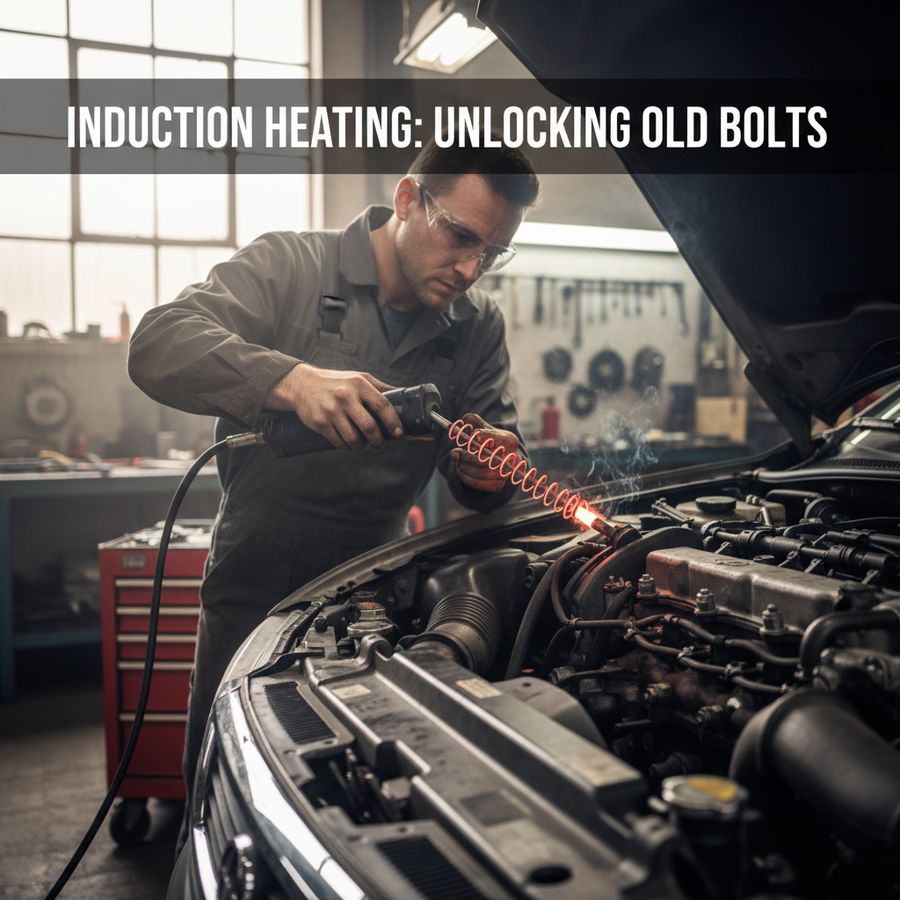
Why bolts seize from rust and heat cycles
Seized bolts are primarily the result of two intertwined factors: rust formation and repeated heat cycles. When a bolt is exposed to moisture and oxygen, iron oxidation occurs, leading to rust buildup. Rust creates a rough, adhesive layer on the bolt’s threads and mating surfaces, significantly increasing friction and bonding the bolt to the surrounding metal.
Heat cycles, which are common in automotive applications, exacerbate this problem. As vehicles operate, bolts experience frequent temperature changes, causing metal expansion and contraction. This repetitive movement causes metal surfaces to deform microscopically and can cause the threads to gall or fuse together over time.
“The combination of corrosion and thermal expansion often results in bolts that are impossible to loosen with conventional tools.”
Moreover, exposure to road salts, chemicals, and environmental contaminants accelerates corrosion, especially in older vehicles or those in harsh climates. Rusted bolts not only complicate repairs but also risk breaking off if excessive force is applied. Understanding these causes emphasizes the need for a precise, controlled approach when attempting to remove seized bolts, such as using an induction heater that can gently heat and expand the bolt to break these bonds without damage.
Induction heater setup for stuck bolts
Setting up an induction heater for releasing seized bolts requires attention to detail to ensure effective and safe operation. First, select the appropriate induction heater model tailored for automotive repair tasks, such as the compact and powerful units designed to work on various metals, including steel and iron bolts.
Begin by cleaning the bolt area to remove dirt, grease, or rust flakes that might interfere with heating efficiency. Position the induction coil or heating tip around the bolt, ensuring close proximity for optimal electromagnetic coupling. Most induction heaters come with adjustable coils or heating tips to fit different bolt sizes and geometries.
Next, set the heater’s power output to a moderate level suitable for the bolt size and material. Starting at a lower wattage helps avoid overheating and potential damage to surrounding parts. Gradually increase power as needed while monitoring the bolt and adjacent components.
It's important to have a heat-resistant surface or insulation underneath to protect the vehicle bodywork or components. Also, ensure the induction heater’s cooling system is functioning properly to prevent tool overheating during extended use.
“Proper setup of the induction heater maximizes efficiency and minimizes risk, making stuck bolt removal faster and safer.”
By following these setup steps, automotive technicians can harness the power of induction heating to loosen rusted bolts effectively and with minimal effort.
Best heating tips for fast bolt removal
To maximize the efficiency of an induction heater when working on rusted bolts, there are several best practices to follow. First, apply heat evenly around the bolt to ensure uniform expansion. Avoid focusing heat on one spot, which can cause uneven thermal stress and potential bolt or component damage.
Use short bursts of heating rather than prolonged continuous heating. This technique reduces the risk of overheating and allows the bolt to expand and contract gradually, helping to break rust bonds more effectively.
Another tip is to alternate heating and mechanical attempts to loosen the bolt. After heating for 20-30 seconds, try to turn the bolt gently with a wrench. Repeat this process until the bolt loosens.
-
Use the correct coil size and shape to encircle the bolt fully.
-
Keep the induction heater’s cooling system active to maintain optimal tool performance.
-
Pre-treat the bolt with a rust penetrant if possible to enhance loosening.
Patience and precision are key. Avoid forcing the bolt, as this increases the risk of breakage. Instead, rely on the controlled thermal expansion provided by the induction heater to do the work. This method is faster and safer compared to traditional open flame heating or hammering.
Protecting nearby rubber seals and wiring
When using an induction heater to remove seized bolts, protecting sensitive nearby components such as rubber seals and wiring is crucial. Induction heating targets the metal bolt specifically, but heat conduction and radiant heat can affect adjacent materials if precautions are not taken.
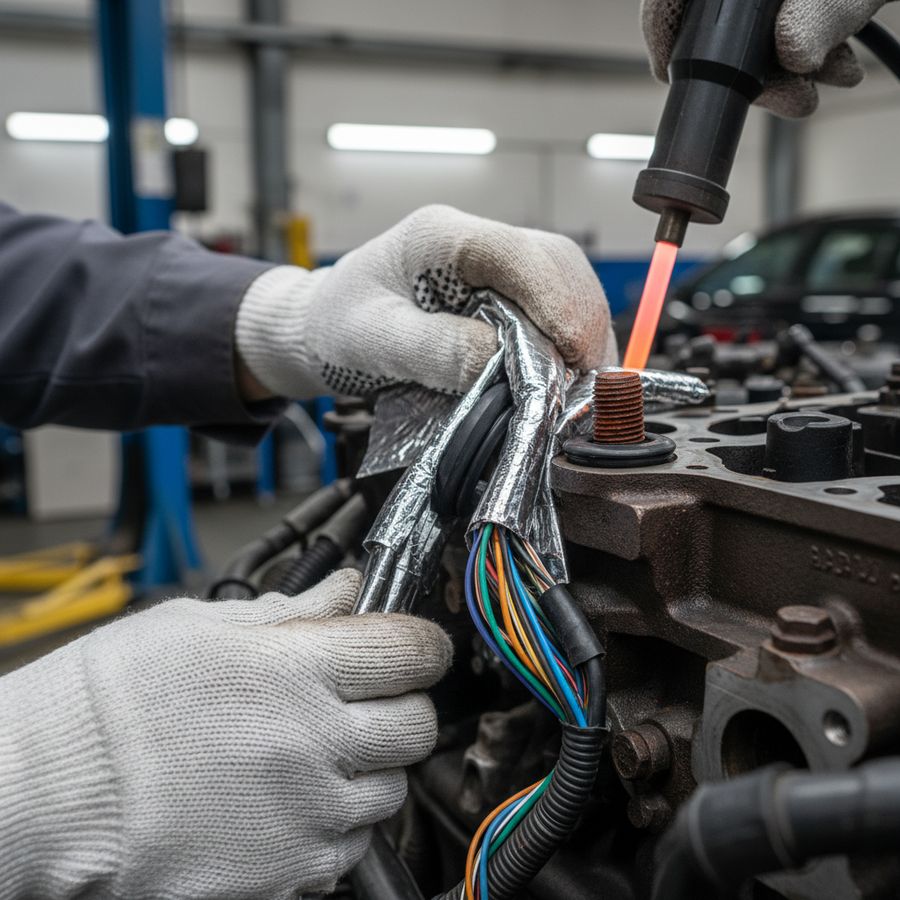
Before applying heat, shield rubber seals and wiring with heat-resistant materials like fiberglass cloth or thermal insulation blankets. This precaution prevents deformation, melting, or degradation caused by excessive heat exposure.
Keep the induction coil focused tightly on the bolt to minimize stray heating. Avoid prolonged heating sessions in one spot, as excessive heat buildup can transfer to nearby plastic or rubber parts.
“Protecting non-metallic components maintains vehicle integrity and prevents costly repairs beyond just bolt removal.”
Additionally, disconnect or move wiring harnesses away from the heating area if possible. Use heat shields or barriers when working in tight spaces to ensure no unintended damage occurs. These steps are essential to maintain the overall health of the vehicle’s components and ensure a smooth repair process.
Safety steps versus using an open flame
Induction heaters offer significant safety advantages over traditional open flame methods when attempting to remove seized bolts. Open flames pose risks such as accidental fires, burns, and hazardous fumes, especially in automotive repair environments where flammable fluids and vapors are common.
In contrast, induction heating is a contactless and flameless process, dramatically reducing fire hazards and improving operator safety. The controlled and localized heating minimizes exposure to extreme temperatures and reduces the risk of damaging components.
Wear appropriate personal protective equipment (PPE) like heat-resistant gloves and eye protection when operating induction heaters. Ensure the workspace is well-ventilated and free from combustible materials.
-
Inspect the induction heater and cables for damage before use.
-
Follow manufacturer instructions for setup and operation.
-
Maintain a safe distance from the heated part during operation.
-
Keep a fire extinguisher nearby as a precaution.
Compared to open flames, induction heaters lower insurance risks and contribute to a cleaner, greener workplace by eliminating gas emissions. For automotive repair professionals, this means safer, faster, and more environmentally responsible bolt removal.
Conclusion
Using an induction heater to remove seized bolts in automotive repair is a revolutionary approach that merges efficiency, safety, and precision. Recognizing the reasons behind bolt seizure—such as rust and heat cycles—enables technicians to understand the benefits of controlled heating. This method effectively loosens stuck bolts without causing damage. To learn more about this innovative technique, visit Induktion Store.
Proper setup and best heating practices ensure the induction heater delivers optimal performance, while protective measures safeguard nearby rubber seals and wiring from heat damage. Most importantly, the safety benefits of induction heating over open flames cannot be overstated—it offers a cleaner, safer, and more cost-effective solution.
For automotive professionals seeking to enhance their repair toolkit, investing in a quality induction heater is a strategic choice that saves time and reduces risks. Embracing this technology reflects a commitment to modern, responsible automotive maintenance and repair.
“Upgrade your approach to stuck bolts and experience faster, safer bolt removal with induction heating technology.”


