

Overview
Induction heaters have become revolutionary tools in the realm of heavy maintenance work, offering safer, cleaner, and more efficient methods of applying heat to metal components. Unlike traditional heating methods that rely on open flames or gas, induction heating uses electromagnetic fields to generate heat directly within the metal parts. This contactless process allows for precise and rapid heating, which is crucial in industrial settings where time and safety are top priorities.
At its core, induction heating is an advanced form of industrial heating that provides significant advantages for maintenance operations, particularly in the automotive, manufacturing, and heavy machinery sectors. Induction heaters generate heat only in the targeted metal area, minimizing energy waste and eliminating risks associated with flames, such as fire hazards and toxic emissions.
Heavy maintenance tasks often involve loosening rusted or seized bolts, heating axles for alignment, and preparing welded parts for production processes. Induction heaters excel in these applications by delivering controlled heat quickly and uniformly, reducing downtime and improving workflow efficiency. The technology is also environmentally friendly, producing zero CO₂ emissions during operation, making it a sustainable option for modern industries.
"Upgrading to induction heating solutions not only enhances operational efficiency but also significantly improves workplace safety and reduces environmental impact."
Overall, induction heaters represent a smart investment for maintenance teams aiming to optimize their processes while safeguarding workers and the environment. Their portability, versatility, and reliability make them indispensable tools for tackling tough mechanical challenges efficiently.
Heavy maintenance challenges
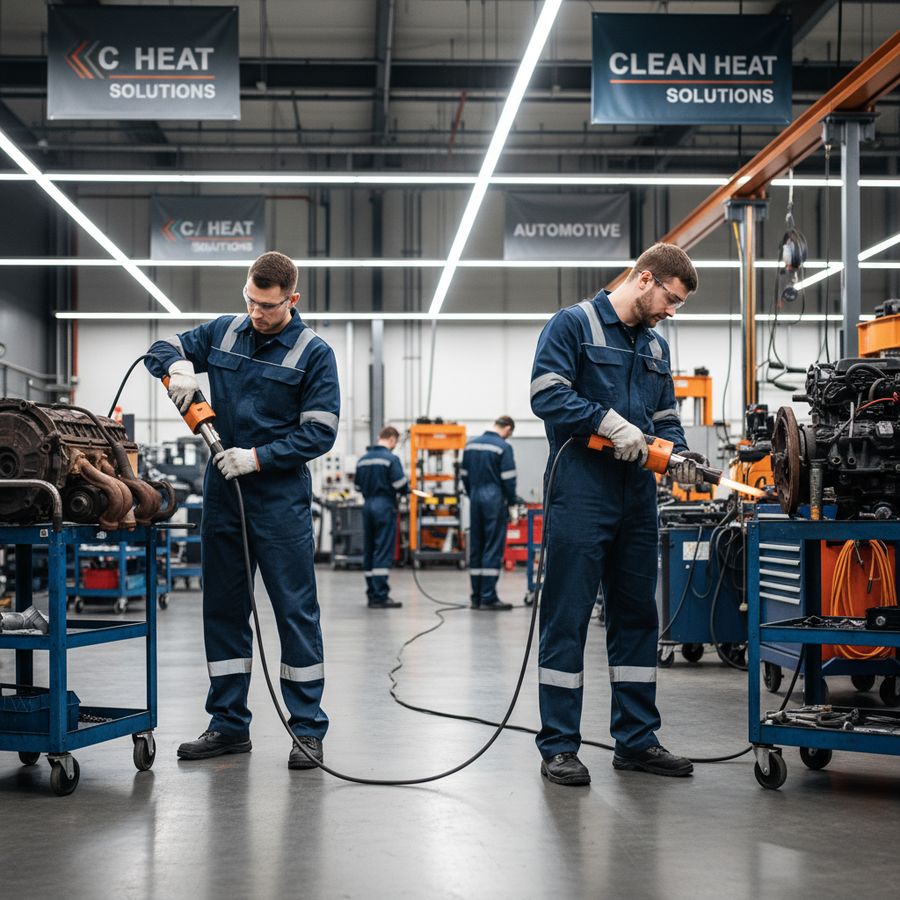
Heavy maintenance work is inherently demanding, involving complex tasks that require both precision and power. One of the most significant challenges is dealing with stubborn mechanical joints such as bolts, nuts, and axles that have corroded, rusted, or fused together over time. Removing these components without causing damage or excessive downtime is critical.
Traditional heating methods in heavy maintenance, such as open flames or gas torches, present several issues. They are often unsafe, increasing the risk of fire or burns, especially in confined or hazardous workspaces. Moreover, open flames can damage sensitive parts by causing uneven heating or overheating, which can compromise the structural integrity of expensive equipment.
Efficiency losses also arise from these conventional methods due to their slower heating times and the need for additional preparatory steps like stripping paint or cleaning surfaces to avoid fire hazards. These factors contribute to longer repair cycles and higher labor costs.
Another critical challenge is maintaining worker safety. Heavy maintenance tasks often take place in environments with strict safety regulations, where exposure to open flames, toxic fumes, and hot surfaces must be minimized. This creates a pressing need for heating solutions that reduce risks without sacrificing performance.
Furthermore, environmental concerns are increasingly shaping maintenance protocols. The use of gas and combustion-based heating contributes to CO₂ emissions and workplace pollution, which conflicts with modern sustainability goals and can lead to higher insurance premiums due to the increased risk profile.
"Heavy maintenance operations demand not only effective heating solutions but also methods that prioritize safety, reliability, and environmental responsibility."
Addressing these challenges requires innovative technology that can provide rapid, controlled heating while mitigating hazards and operational inefficiencies.
Induction heating solutions
Induction heaters offer a cutting-edge solution to the myriad challenges faced in heavy maintenance. By using electromagnetic fields to heat metals directly, induction heating eliminates the need for open flames or gas, creating a much safer and cleaner work environment. This technology is especially effective for releasing mechanical joints, heating axles and shafts, and preparing welded parts during production or repair.
The core advantage of induction heating lies in its precision and speed. Induction heaters can target specific metal components without affecting surrounding materials, preventing damage to paint, rubber seals, or other sensitive parts. This focused heating capability reduces preparation time and minimizes post-heating cleanup.
Portability is another key benefit; many induction heaters, such as the ALESCO ACE12 or A80V, are lightweight and compact, allowing technicians to easily transport and operate them in various heavy maintenance settings. The integrated cooling systems in these units enable extended use without overheating, ensuring consistent performance throughout demanding work shifts.
Environmental benefits further enhance the appeal of induction heating. Since the process is 100% carbon neutral and produces no harmful emissions, it supports companies' sustainability initiatives while also lowering operational costs related to insurance and compliance.
-
Contactless and rapid heating reduces downtime
-
Eliminates fire and explosion risks from open flames
-
Preserves surrounding materials and equipment integrity
-
Compact and portable units enable flexible use in diverse environments
-
Reduces CO₂ emissions and improves workplace air quality
"Induction heating solutions transform heavy maintenance by combining safety, efficiency, and environmental stewardship in one powerful technology."
These features position induction heaters as essential tools for modern maintenance teams aiming to enhance productivity while safeguarding workers and assets.
Efficiency gains
One of the most compelling reasons to integrate induction heaters into heavy maintenance workflows is the substantial efficiency gains they deliver. Induction heating significantly reduces the time required to heat metal components compared to traditional methods, which translates directly into lower labor costs and faster turnaround times.
Because induction heating is highly targeted and contactless, it enables technicians to heat only the necessary parts without impacting adjacent areas. This precision means fewer steps are required, such as removing paint or shielding sensitive components, further speeding up maintenance processes.
Additionally, induction heaters generate heat almost instantaneously, reaching desired temperatures faster than gas torches or ovens. This rapid response allows for quicker loosening of seized bolts, alignment of parts, or preheating for welding, reducing equipment downtime.
The lightweight and portable design of many modern induction heaters means maintenance crews can move equipment quickly between job sites or different sections of a machine, enhancing operational flexibility. This mobility supports just-in-time maintenance practices that minimize production disruptions.
-
Faster heating reduces total repair time
-
Targeted heat application minimizes preparation and cleanup
-
Portable units enable quick deployment across maintenance areas
-
Consistent heating quality improves repair reliability
-
Less energy wasted compared to combustion-based methods
"Efficiency gains from induction heating not only accelerate maintenance cycles but also improve resource utilization and cost-effectiveness."
Ultimately, these efficiency improvements empower heavy maintenance teams to complete repairs more quickly, reduce operational costs, and increase overall productivity without compromising on safety or quality.
Worker safety improvements
Enhancing worker safety is a paramount concern in heavy maintenance, where exposure to hazardous conditions is common. Induction heaters contribute significantly to a safer workplace by eliminating many of the risks associated with traditional heating methods.
Because induction heating is contactless and flame-free, it removes the danger of burns and fire hazards often posed by gas torches or open flames. This is particularly important in confined spaces or environments with flammable materials. The absence of combustion also means no toxic fumes or carbon monoxide emissions, improving air quality and reducing respiratory hazards for workers.
Induction heaters are designed with integrated cooling systems and ergonomic features to prevent overheating of the tool and reduce operator fatigue. Their precise heat control also prevents overheating of metal parts, which protects workers from accidental contact burns and equipment damage.
Additionally, the cleaner heating process reduces the need for protective barriers or extensive personal protective equipment (PPE), allowing maintenance crews to work more comfortably and efficiently. The reduction in fire risk can also lead to lower insurance premiums and fewer work stoppages due to safety incidents.
-
Eliminates flame-related burn and fire risks
-
Reduces exposure to harmful combustion gases
-
Ergonomic design minimizes operator strain
-
Precise heat control protects workers and equipment
-
Supports compliance with strict workplace safety regulations
"Induction heating technology transforms heavy maintenance into a safer, healthier environment for workers while maintaining high operational standards."
By prioritizing worker safety, companies can reduce accidents, improve morale, and create a culture of responsible maintenance practices.
Case examples
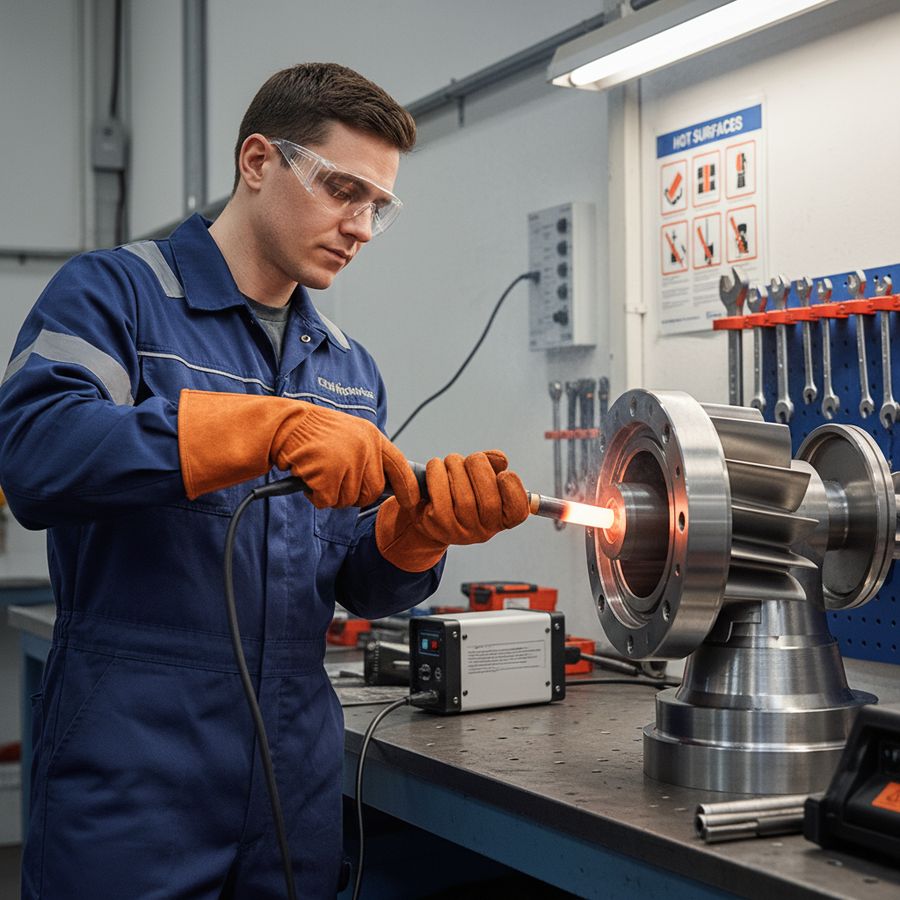
Real-world applications highlight how induction heaters have transformed heavy maintenance practices across various industries. For example, automotive repair shops frequently use portable induction heaters like the ALESCO ACE12 to release rusted bolts and axles safely and efficiently without damaging nearby components.
In manufacturing plants, induction heating is applied for pre- and post-welding processes, ensuring metal parts reach optimal temperatures quickly to enhance weld quality and reduce cycle times. The precision heating helps maintain structural integrity and reduces material waste.
Another notable example comes from heavy machinery maintenance, where induction heaters enable technicians to heat large metal parts for alignment or tensioning without needing bulky ovens or open flames. This flexibility improves workflow and minimizes equipment downtime.
Customer testimonials consistently emphasize the ease of use, portability, and safety improvements induction heaters bring to demanding repair jobs. Many users report significant reductions in heating times and associated labor costs, along with a cleaner, safer working environment.
"One user remarked, 'The induction heater cut through a seized joint that traditional methods struggled with, all while keeping our workspace safe and clean.'"
These case examples underscore the practical benefits and growing adoption of induction heating technology in heavy maintenance operations worldwide.
Conclusion
Incorporating induction heaters into heavy maintenance workflows offers transformative benefits that address long-standing challenges in industrial heating. From improving worker safety and reducing environmental impact to delivering significant efficiency gains, induction heating is a modern solution that meets the demands of today’s fast-paced, safety-conscious industries.
The technology's capability to quickly and accurately heat metal components without the use of open flames or gas not only speeds up repair and maintenance tasks but also fosters a safer and cleaner work environment. Portable induction heaters enable maintenance teams to tackle challenging jobs with flexibility and reliability, minimizing downtime and operational costs. For more information, check out Induktion Store.
As industries continue to prioritize sustainability and worker welfare, induction heating stands out as a future-ready technology that enhances productivity while supporting corporate responsibility goals. Companies invested in heavy maintenance can benefit greatly from adopting induction heaters as essential tools for safer, faster, and more effective industrial heating.
"Induction heating is not just an alternative heating method—it is the standard for advancing heavy maintenance toward a safer, more efficient, and environmentally responsible future."


