
Common applications of induction heating in heavy maintenance
by Mikael Rosvall on Nov 24, 2025

Overview
Induction heating applications have revolutionized the heavy maintenance industry by providing a safe, efficient, and environmentally friendly method for heating metals. Unlike traditional methods that rely on open flames or gas, induction heating uses electromagnetic fields to generate heat directly within the metal workpiece, ensuring rapid and precise temperature control without direct contact. This method is especially valuable in heavy maintenance settings where time, safety, and precision are paramount.
Heavy maintenance operations, such as those in automotive repair, industrial machinery upkeep, and large-scale manufacturing, often require heating metal parts to facilitate processes like loosening stuck components, welding, or heat treatment. Induction heating excels in these applications because it is fast, clean, and reduces the risk of damage to surrounding materials or paint finishes. Moreover, it contributes to a safer work environment by eliminating open flames and reducing CO₂ emissions, aligning with modern environmental standards.
One of the key advantages of induction heating in heavy maintenance is its ability to target specific areas without affecting the entire component. This precision results in less downtime and less risk of thermal distortion or damage. Additionally, induction heating equipment is portable and user-friendly, allowing technicians to perform on-site repairs and maintenance efficiently. As industries continue to seek greener and more cost-effective solutions, induction heating stands out as a superior technology for heavy maintenance needs.
“Induction heating not only enhances operational efficiency but also significantly improves workplace safety and environmental responsibility in heavy maintenance.”
---
Releasing Mechanical Joints
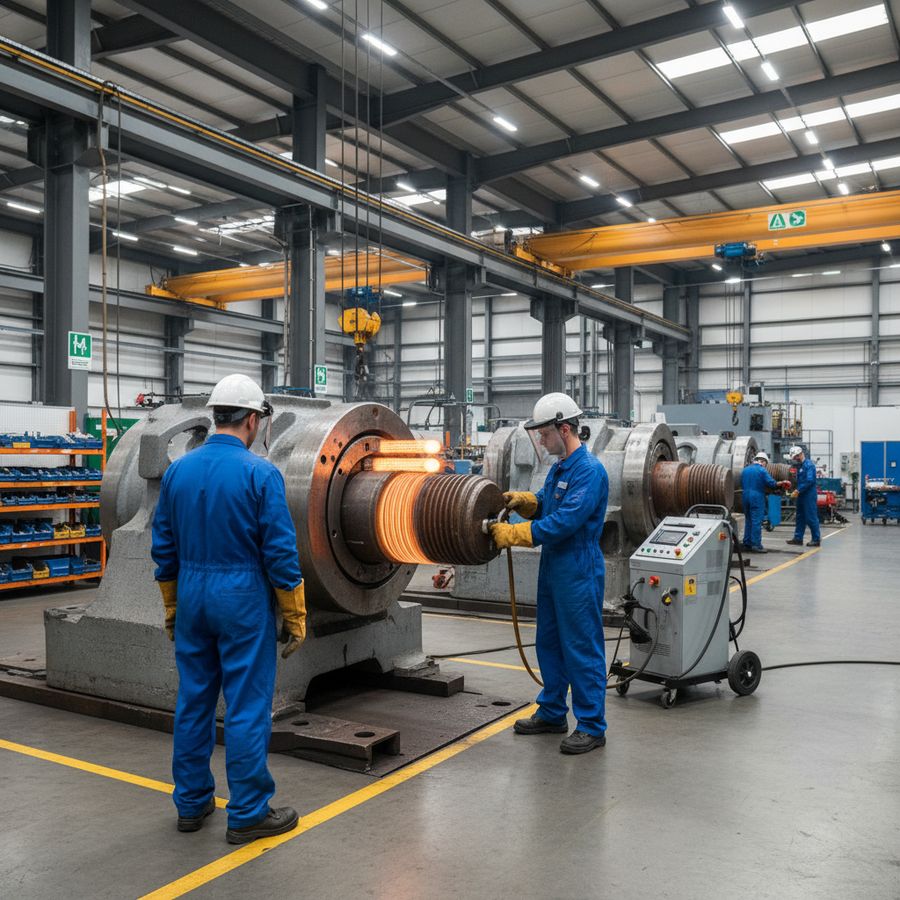
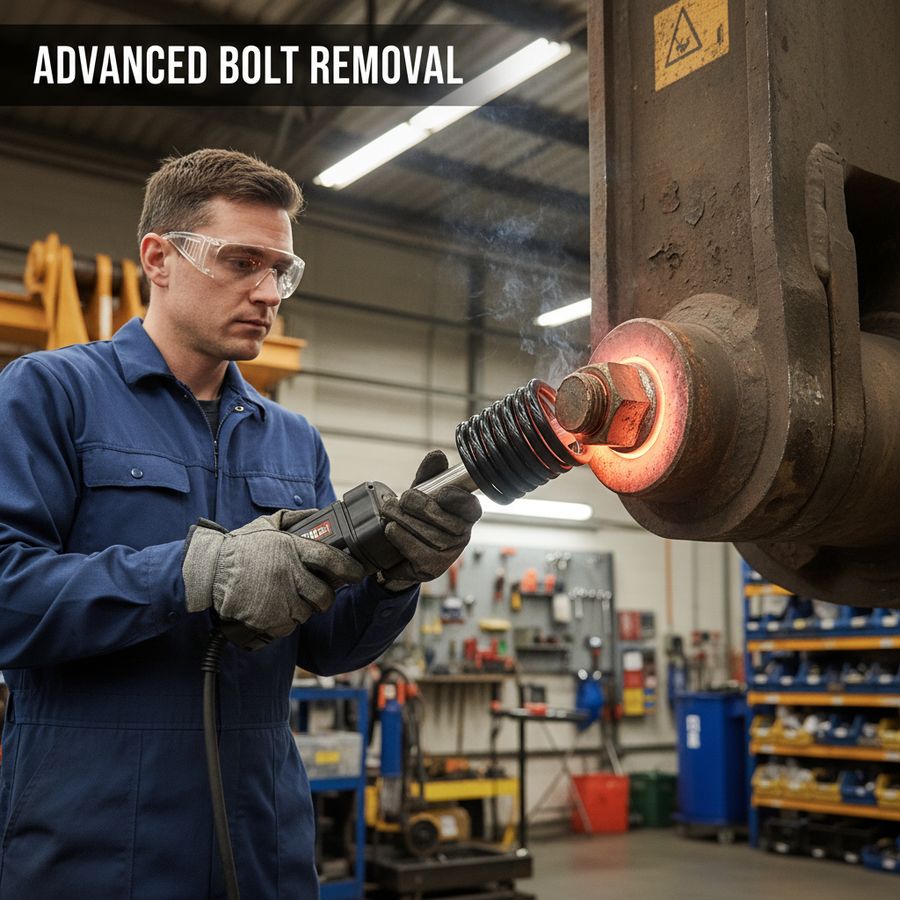
One of the most common induction heating applications in heavy maintenance is the releasing of mechanical joints. Mechanical joints such as bolts, nuts, axles, and shafts often become seized or corroded due to exposure to harsh environments, making disassembly difficult and time-consuming. Induction heating offers a reliable solution by heating these components quickly and evenly, causing them to expand and loosen without damaging the metal or adjacent parts.
The process of mechanical joint heating through induction is highly controlled. By applying electromagnetic energy directly to the joint, heat is generated internally, which reduces the risk of overheating or warping. This targeted heating allows technicians to separate components with minimal force, reducing the chance of damaging threads or surrounding materials. Additionally, induction heating eliminates the need for open flames or torches, significantly improving job site safety.
Besides safety, induction heating saves valuable time during repairs. Traditional heating methods can take several minutes to warm a joint adequately, whereas induction heaters can achieve the necessary temperature in a fraction of the time. This efficiency translates to faster turnaround times in heavy maintenance shops, helping businesses reduce labor costs and improve throughput.
“Using induction heating for releasing mechanical joints ensures quicker disassembly with enhanced safety and precision.”
-
Speeds up the loosening of corroded or seized joints
-
Reduces risk of damage to components
-
Eliminates the dangers associated with open flames
-
Enables precise and controlled heating
---
Heating Welded Parts
Induction heating has become an indispensable technique for heating welded parts during heavy maintenance, offering a modern alternative to traditional flame or furnace heating. This method is commonly applied in welding heat treatment processes to ensure proper alignment, reduce residual stress, and improve the structural integrity of welded joints.
By using induction heating for welded parts, technicians can precisely control the temperature and heating rate, which is critical to achieving optimal metallurgical properties. This control helps prevent common welding defects such as cracking, distortion, and weakening of heat-affected zones. Induction heating also facilitates heat alignment, allowing components to be adjusted or repositioned while hot, thereby improving fit and finish in production or repair tasks.
Another significant advantage is the ability to perform pre- and post-weld heat treatments onsite, eliminating the need to transport heavy assemblies to specialized furnaces. This flexibility reduces downtime and logistical challenges, making it an excellent solution for industries engaged in heavy equipment maintenance, shipbuilding, and structural steel fabrication.
“Induction heating offers precise, rapid, and uniform heating essential for quality welding heat treatment and improved weld longevity.”
Pre- and Post-Heating Processes
Pre- and post-heating are vital steps in many heavy maintenance and welding procedures, and induction heating is increasingly favored for these processes due to its efficiency and accuracy. Pre-heating involves warming metal components before welding or machining to reduce thermal shock and minimize the risk of cracking, while post-heating ensures proper cooling and stress relief after welding.
With induction heating, pre- and post-heating processes become more streamlined and safer. The technology allows for rapid heating to specific temperatures without the use of flames or combustible gases. This precision reduces the likelihood of overheating or uneven temperature distribution, which can compromise the mechanical properties of metals.
In addition to improving metallurgical outcomes, induction heating in these phases enhances workplace safety by eliminating open flames and reducing harmful emissions. This aspect is particularly important in heavy maintenance environments where confined spaces and sensitive components are common. Moreover, the portability of induction heaters enables pre- and post-heating to be performed directly at the maintenance site, cutting down on transportation and setup time.
“Induction heating ensures controlled and uniform pre- and post-heating, essential for maintaining metal integrity and extending component life.”
Field Enhancer Usage
The use of a field enhancer is a specialized technique that significantly improves the effectiveness of induction heating applications in heavy maintenance. A field enhancer is an accessory designed to concentrate and direct the electromagnetic field generated by an induction heater, allowing for more efficient heating of specific areas, especially in hard-to-reach or complex geometries.
In practice, the field enhancer boosts the intensity of the magnetic field at the target zone, resulting in faster heating times and reduced energy consumption. This enhancement is particularly useful when working with small joints, bolts, or irregularly shaped parts where conventional induction coils might struggle to deliver uniform heat.
Furthermore, the field enhancer helps protect adjacent components from unwanted heating, safeguarding sensitive materials and coatings. This precision reduces the risk of damage and rework, making it a valuable accessory in heavy maintenance operations that demand high accuracy and safety standards.
“Field enhancers optimize induction heating performance by focusing energy where it’s needed most, improving speed and safety in maintenance tasks.”
Spare Parts Heating
Heating spare parts is another crucial application of induction heating in heavy maintenance. Often, spare parts such as bearings, bushings, or gear components require heating before installation to facilitate assembly by thermal expansion. Induction heating provides a quick, clean, and controlled method to achieve this without the risks associated with traditional heating methods.
The induction process heats the metal evenly from within, allowing parts to expand uniformly for easier fitting. This method reduces the need for forceful assembly, which can damage components or lead to misalignment. Additionally, induction heating can be precisely controlled to avoid overheating, which might otherwise degrade the quality or hardness of the spare parts.
Due to its portability and rapid heating capability, induction heating equipment can be used directly in maintenance shops or field locations, enhancing operational flexibility. This capability minimizes downtime and helps maintain continuous equipment availability, which is critical in industries such as automotive repair, manufacturing, and heavy machinery maintenance.
“Induction heating streamlines spare parts installation by providing fast, uniform heating that protects component integrity.”
Conclusion
Induction heating applications have transformed heavy maintenance by providing a safer, more efficient, and environmentally responsible heating method. From releasing mechanical joints and heating welded parts to facilitating pre- and post-heating processes, induction heating consistently delivers precision and speed, reducing downtime and improving overall operational safety.
Additionally, tools like field enhancers significantly boost the effectiveness of induction heating by focusing energy on challenging heating areas. The capacity to quickly heat spare parts also streamlines assembly tasks. By adopting induction heating, you not only optimize maintenance workflows but also comply with contemporary sustainability and safety standards by eliminating open flames and reducing emissions. To learn more, visit Induktion Store.
For heavy maintenance professionals seeking to upgrade their heating solutions, induction heating offers a compelling blend of innovation, reliability, and environmental friendliness that can significantly improve productivity and safety.
“Embracing induction heating in heavy maintenance is a strategic investment that boosts efficiency, safety, and sustainability in industrial operations.”


