
Heat alignment: fixing metal distortion with induction
bis Mikael Rosvall auf Apr 03, 2026

Overview
Heat alignment is a critical process in metalworking and steel repair that addresses the challenge of metal distortion caused by manufacturing, welding, or mechanical stress. Traditional methods of metal straightening often rely on mechanical force or flame heating, which can be inefficient, unsafe, and sometimes damaging to the material. Induction heating emerges as a superior technique, offering precise, rapid, and contactless heating that significantly improves the quality and efficiency of distortion repair.
By harnessing electromagnetic fields, induction heating heats metal parts quickly and uniformly without direct contact, minimizing the risk of overheating or warping. This method is especially valuable in automotive and industrial steel repair where maintaining dimensional accuracy is paramount. The technology not only accelerates the straightening process but also enhances workplace safety by eliminating open flames and reducing CO₂ emissions.
“Induction heating revolutionizes metal straightening by combining speed, precision, and environmental benefits, making it an indispensable tool in modern steel repair.”
In this blog, we will explore what heat alignment entails, how induction heating is applied for straightening steel parts, best practices for applying heat, techniques for measuring alignment, and common pitfalls to avoid during distortion repair. Understanding these elements equips professionals with the knowledge to optimize their metal straightening operations with induction heating technology.
What is heat alignment in metalwork
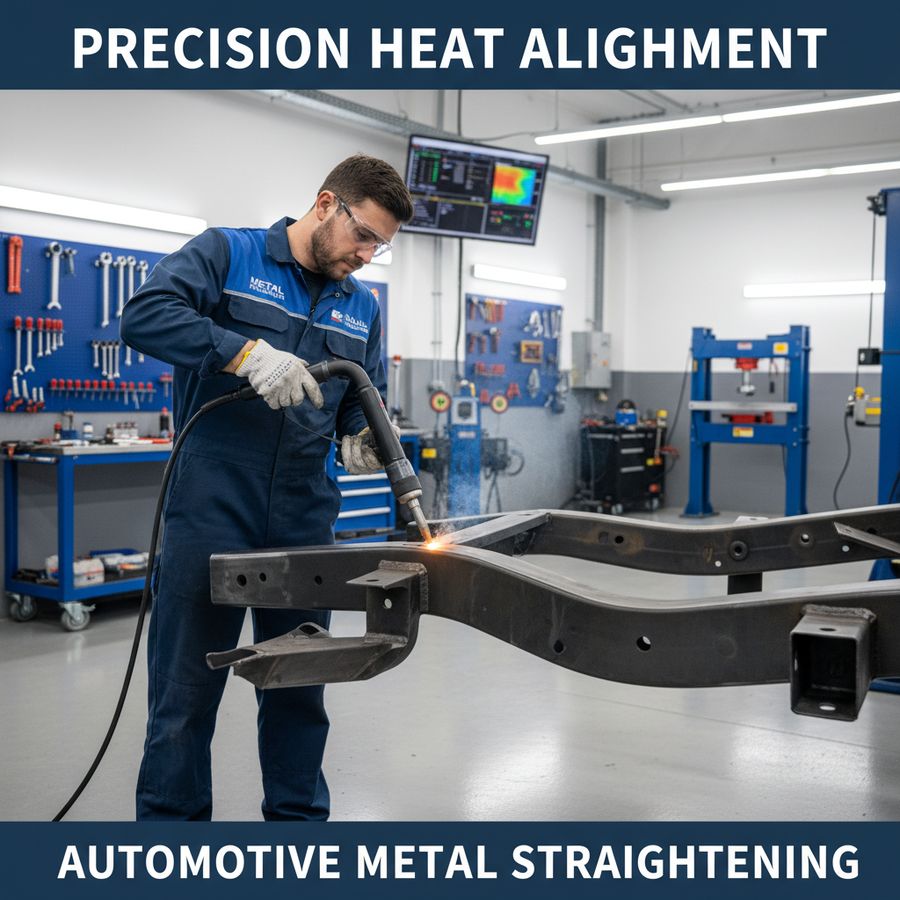
Heat alignment in metalwork refers to the controlled application of heat to distorted metal components to relieve internal stresses and restore their original shape. Metals like steel can warp or bend due to uneven cooling, mechanical deformation, or welding processes. Heat alignment utilizes thermal energy to soften specific areas, allowing the metal to be reshaped without cracking or excessive mechanical force.
Unlike mechanical bending, heat alignment targets the molecular structure of the metal. Heating causes the metal’s crystalline lattice to expand and become more malleable, facilitating precise adjustments. This method is essential in industries where tight tolerances and structural integrity are critical, such as automotive repairs, heavy machinery maintenance, and construction steelwork.
Induction heating is the preferred method for heat alignment because it offers rapid, localized heating that minimizes damage to surrounding areas. It can be programmed for specific temperature profiles and heating durations, optimizing the repair’s effectiveness. This controlled approach reduces the risk of further distortion and preserves the metal’s mechanical properties, ensuring the longevity of repair.
“Heat alignment is not just about reheating metal; it’s a sophisticated process to restore precision and durability in steel components.”
Induction heating for straightening steel parts
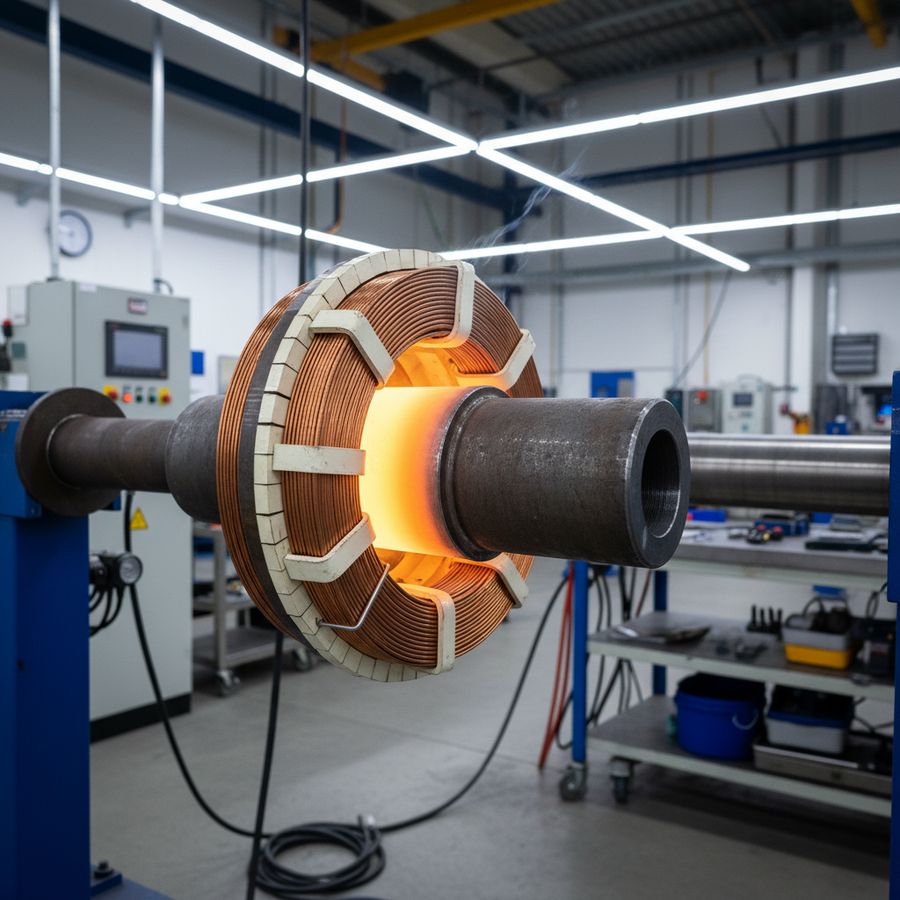
Induction heating has become an industry standard for metal straightening due to its efficiency and safety advantages. This technique uses electromagnetic induction to generate heat deep within the steel part, allowing for uniform and rapid temperature rise. Unlike traditional flame heating, induction avoids surface overheating and provides better control over the heat affected zone.
The process involves placing a coil around or near the steel part to be straightened. When energized, the coil produces an alternating magnetic field that induces electrical currents (eddy currents) inside the metal. These currents generate heat internally, softening the steel at the desired location for distortion repair.
Key benefits of induction heating for metal straightening include:
-
Speed: Heats steel parts in seconds to minutes, reducing downtime.
-
Precision: Localized heating targets only the distorted area, avoiding damage to adjacent sections.
-
Safety: No open flames or hazardous gases, lowering risks and insurance costs.
-
Environmental impact: CO₂ neutral operation with no combustion emissions.
Because of these advantages, induction heating is widely used in automotive steel repair and industrial maintenance, improving both operational productivity and repair quality.
“Induction heating enables flawless steel straightening with unmatched speed and environmental responsibility.”
Where to apply heat for best results
Applying heat correctly is crucial to effective heat alignment and distortion repair. The goal is to soften the metal only at the points of distortion while maintaining the stability of the surrounding structure.
Heating should focus on the area exhibiting bending or warping, typically on the concave side of the bend. Applying heat here allows the metal to expand and relax internal stresses, making it easier to return to its original shape. Avoid heating the convex side, as this can worsen distortion.
In practice, technicians use induction coils or heating tips tailored to the shape and size of the steel part. The heat input must be uniform and measured carefully to prevent overheating, which can cause metallurgical changes or surface damage. Gradual heating with intermittent cooling cycles often yields the best results, allowing controlled realignment.
-
Focus on the distorted zones with localized induction heating.
-
Use smaller coils or tips for precision heating on complex shapes.
-
Monitor temperature closely to maintain optimal heat input.
-
Allow natural or forced cooling to stabilize the corrected shape.
Proper heat application not only ensures successful metal straightening but also preserves the strength and durability of the steel component, essential for long-term performance.
“Strategic heat application is the foundation of effective distortion repair and metal straightening.”
Measuring alignment and controlling heat input
Accurate measurement and heat control are vital for consistent and successful heat alignment. Before heating, technicians must assess the degree and location of distortion using precise measuring tools such as dial indicators, laser alignment systems, or straight edges.
During induction heating, controlling the heat input prevents overheating and subsequent material damage. Modern induction heaters often include temperature sensors and programmable controls to maintain the metal within a safe thermal range. This level of control reduces the risk of new distortions caused by uneven heating or excessive temperatures.
Post-heating measurement confirms whether the alignment has been restored to specification. If necessary, the heating and cooling cycle can be repeated with adjusted parameters. This iterative approach ensures the highest accuracy in metal straightening.
“Consistent measurement and controlled heating transform metal straightening from guesswork into a precise science.”
Employing advanced measurement tools and induction heaters with integrated temperature control not only improves quality but also enhances workflow efficiency in steel repair operations.
Common mistakes that cause new distortion
While heat alignment with induction heating offers many advantages, improper techniques can cause new distortions, undermining repair efforts. Common mistakes include:
-
Uneven heating: Applying heat unevenly can create thermal gradients that warp the metal instead of straightening it.
-
Overheating: Excessive temperatures can alter the metal’s microstructure, weakening it or causing surface damage.
-
Incorrect heat placement: Heating the wrong area or too large a zone can spread distortion or stress to adjacent parts.
-
Insufficient cooling: Rapid or uncontrolled cooling after heating may introduce new stresses leading to warping.
-
Neglecting measurement: Failing to monitor alignment before, during, and after heating results in inaccurate repairs.
Understanding these pitfalls helps technicians refine their methods, improving outcomes and avoiding costly rework. Proper training, high-quality induction equipment, and adherence to best practices are essential to minimize these risks.
“Avoiding common errors in induction heat alignment is key to sustainable and effective metal repair.”
Conclusion
Heat alignment using induction heating offers a modern, efficient solution for metal straightening and distortion repair, particularly for steel components. This contactless heating method provides rapid, precise, and environmentally friendly heat application, surpassing traditional flame or mechanical techniques. For more information on how induction heating can benefit your projects, visit Induktion Store.
By understanding where and how to apply heat, measuring alignment accurately, and controlling thermal inputs, professionals can restore metal parts to their original specifications while preserving their strength and durability. Avoiding common mistakes ensures the longevity of repairs and reduces operational downtime.
For industries relying on steel repair and distortion correction, induction heating is not just an option but a necessity for safer, cleaner, and cost-effective metalwork. Adopting this technology improves workflow, reduces insurance risks, and supports sustainable practices in metal maintenance.
“Induction heating is transforming heat alignment from a challenging task into a precise, reliable, and green process.”


