

Overview
Removing seized bolts is a common challenge in automotive repair and heavy maintenance. These bolts often become stuck due to prolonged exposure to rust, corrosion, and heat, making traditional removal methods difficult and time-consuming. Fortunately, induction heating offers a modern, efficient, and safer solution for seized bolt removal without the risks associated with open flames or excessive force.
Induction heating works by generating an electromagnetic field that heats the metal bolt directly, causing it to expand and break free from corrosion bonds. This contactless heating method allows technicians to target only the seized bolt, preserving surrounding components and reducing the risk of damage.
Thanks to innovations in induction heater technology, such as portable units and specialized heating tips, this method has become increasingly popular in automotive repair shops and industrial maintenance settings. Using induction heating can dramatically reduce the labor time involved, lower insurance risks by eliminating open flames, and enhance workplace safety.
“Induction heating is revolutionizing seized bolt removal by delivering a safer, cleaner, and more efficient alternative to traditional heating methods.”
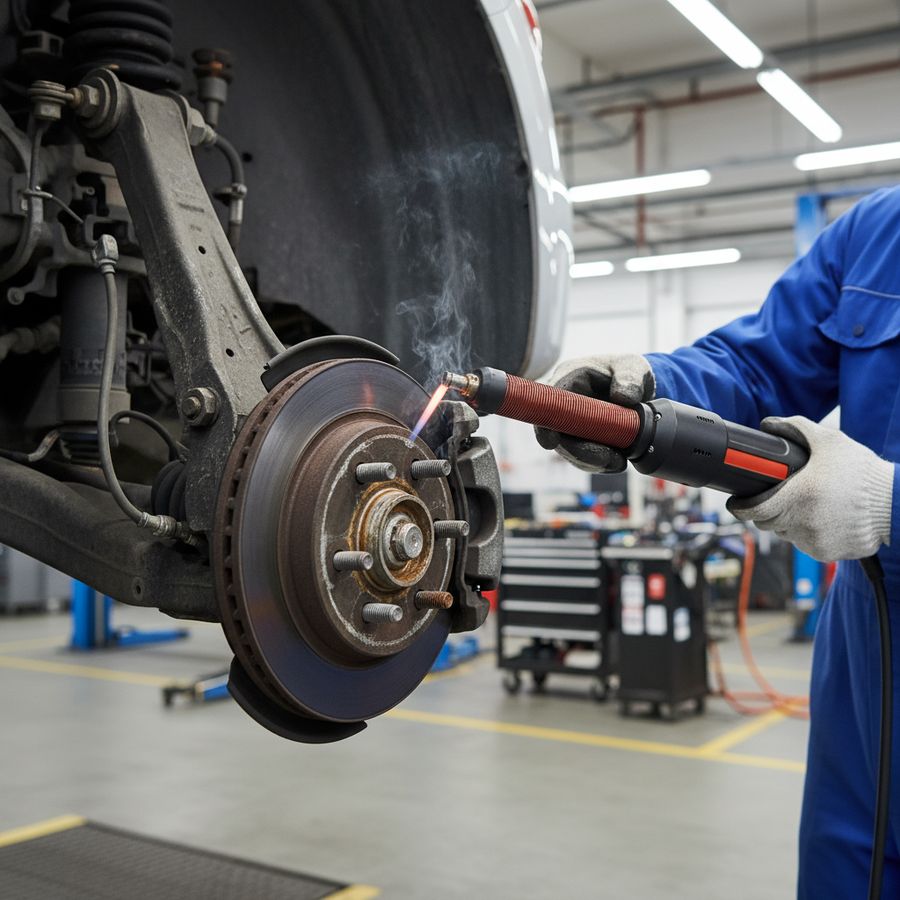
Why bolts seize: rust, Heat, And corrosion
Bolts typically seize due to a combination of environmental and mechanical factors. Rust forms when iron or steel bolts are exposed to moisture and oxygen, creating iron oxide that binds the bolt tightly to surrounding metal parts. Over time, this rust acts like a glue, making bolt removal extremely difficult.
Heat also plays a significant role. Bolts exposed to high temperatures during engine operation or welding can expand and contract repeatedly, causing metal fatigue and sometimes fusing threads together. This thermal cycling exacerbates the challenge of removing rusted bolts.
Corrosion from chemicals, salt, and other contaminants further degrades bolt surfaces and fastener joints. Corrosion can lead to metal pitting or surface irregularities, increasing friction between bolt and nut or threaded holes.
Understanding these causes helps automotive repair professionals select the right approach to remove seized bolts effectively without damaging surrounding components or wasting valuable time.
Induction heating steps for seized bolts
Using induction heating to free seized bolts involves a precise series of steps designed to maximize effectiveness while minimizing damage. First, clean the bolt surface to remove dirt and grease for better heat transfer.
Next, select the appropriate induction heating tip size that fits snugly around the bolt head or nut. Connect the induction heater and power it on, setting the temperature and time based on bolt size and material.
Apply the induction heat directly to the seized bolt. The electromagnetic field rapidly heats the metal, causing expansion that loosens rust and corrosion bonds. Heat application usually takes just a few minutes, depending on bolt thickness.
Once heated, immediately attempt to loosen the bolt using the correct tools, as the metal will contract upon cooling, tightening the hold again if delayed.
“Precision in applying induction heat ensures quick and safe seized bolt removal without risking damage to the bolt or surrounding parts.”
Choosing the right heating tip size
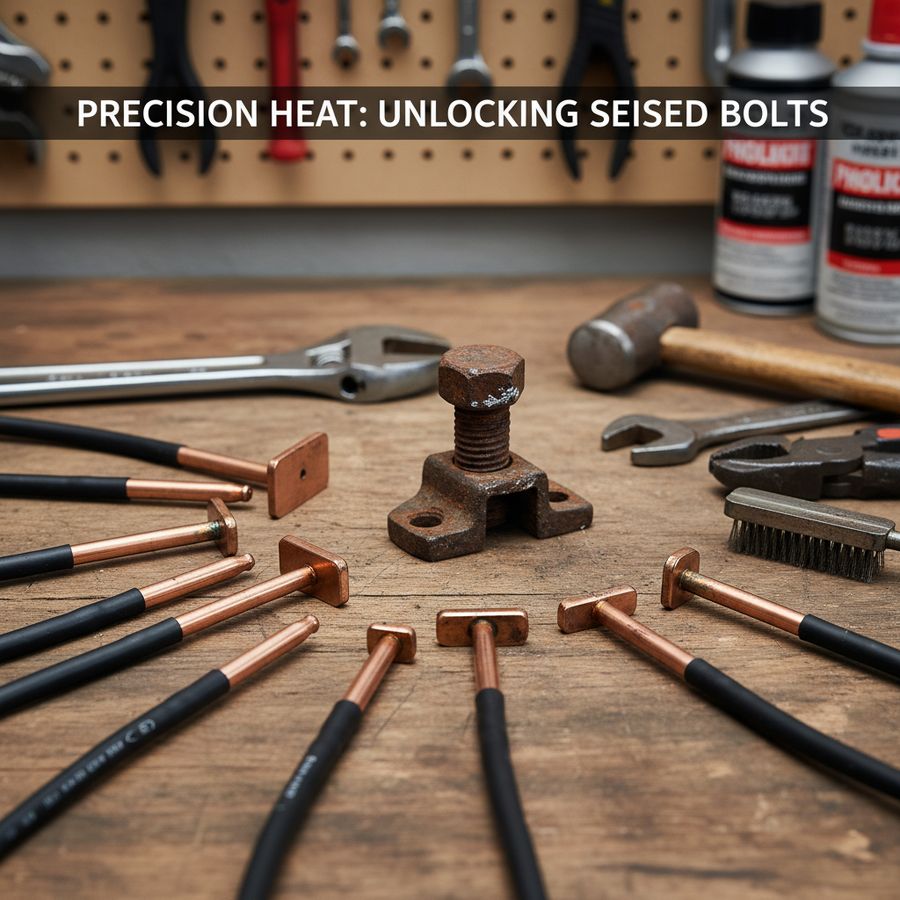
Selecting the correct heating tip size is critical for efficient induction heating in seized bolt removal. Heating tips come in various diameters and shapes to accommodate different bolt sizes and configurations.
A tip that is too large will disperse heat inefficiently, wasting energy and increasing heat-up time. Conversely, a tip that is too small may not cover the bolt surface evenly, leading to uneven expansion and ineffective loosening.
Ideally, the heating tip should fit snugly around the bolt head or nut, concentrating the electromagnetic field precisely where it's needed. Many induction heater suppliers offer standard and specialized tip designs, such as 90° angled tips or split tips, to reach difficult or recessed bolts.
Proper tip selection enhances heating speed, reduces energy consumption, and protects nearby components by focusing heat only on the seized bolt.
Avoiding damage to nearby rubber and wiring
One of the key advantages of induction heating over traditional flame or torch methods is its precision and safety. However, caution is necessary to avoid damage to nearby rubber and wiring during the heating process.
Rubber components and electrical wiring are sensitive to heat and can degrade or melt if exposed to excessive temperatures. To protect these parts, always:
- Use shielding materials or heat-resistant blankets around vulnerable areas.
- Maintain a safe distance between the heating tip and non-metallic components.
- Apply heat in short bursts, allowing parts to cool between cycles.
- Ensure the heating tip is properly sized and focused only on the bolt.
Adhering to these precautions helps preserve the integrity of surrounding parts, ensuring the repair process is safe and does not lead to additional costly damage.
When to use penetrant vs induction heat
Deciding between using a chemical penetrant or induction heating for seized bolt removal depends on the situation and bolt condition. Penetrants are liquid solutions designed to seep into the threads and dissolve rust or corrosion, easing loosening.
Penetrants are often the first step due to their simplicity and low cost. They work best on bolts with light to moderate rust and when the area is difficult to access with heating tools.
However, penetrants can be time-consuming, sometimes requiring hours of soaking, and may prove ineffective on heavily rusted or heat-fused bolts. In these cases, induction heating is the preferred method for quick, targeted heat expansion.
Induction heating is ideal for severe cases where penetrants fail or when quick turnaround is critical. Combining both methods can also be effective: applying penetrant first, then induction heat to maximize bolt loosening.
Conclusion
Induction heating is a powerful and efficient solution for removing seized bolts in automotive repair and heavy maintenance. By leveraging electromagnetic fields to precisely heat the bolt, this method reduces labor time, enhances safety, and protects surrounding components.
Understanding why bolts seize, selecting the right heating tip, and taking precautions to avoid damaging nearby rubber and wiring are essential for successful application. Additionally, knowing when to use chemical penetrants versus induction heating optimizes repair strategies.
For professionals seeking a modern, reliable way to tackle rusted bolts and seized fasteners, induction heating is an indispensable tool that combines speed, safety, and precision.
“Adopting induction heating transforms seized bolt removal from a frustrating task into a streamlined, safe, and effective process.”


