

Overview
Induction heating technology has revolutionized the auto repair industry by offering a safer, efficient alternative to traditional torch heating methods. Unlike torches that rely on open flames, induction heaters use electromagnetic fields to heat metal components quickly and precisely without direct contact. This innovation significantly minimizes risks associated with fire hazards and toxic emissions, making it an ideal choice for modern workshops focused on safety and productivity.
When comparing induction heater vs torch, the advantages of induction heating become clear. It provides rapid, controlled heat specifically to the targeted metal part, avoiding damage to surrounding materials. This is especially useful in automotive repairs where precision heating is required to loosen seized bolts or mechanical joints without compromising vehicle integrity.
“Ditch open flames, reduce CO₂ emissions, and enhance workplace safety—all while cutting operational costs.”
By adopting induction heaters, auto repair professionals not only improve safety but also increase efficiency and reduce long-term costs related to fire damage or insurance. This blog explores how induction heating stands out as the safer and smarter choice for auto repair heat applications.
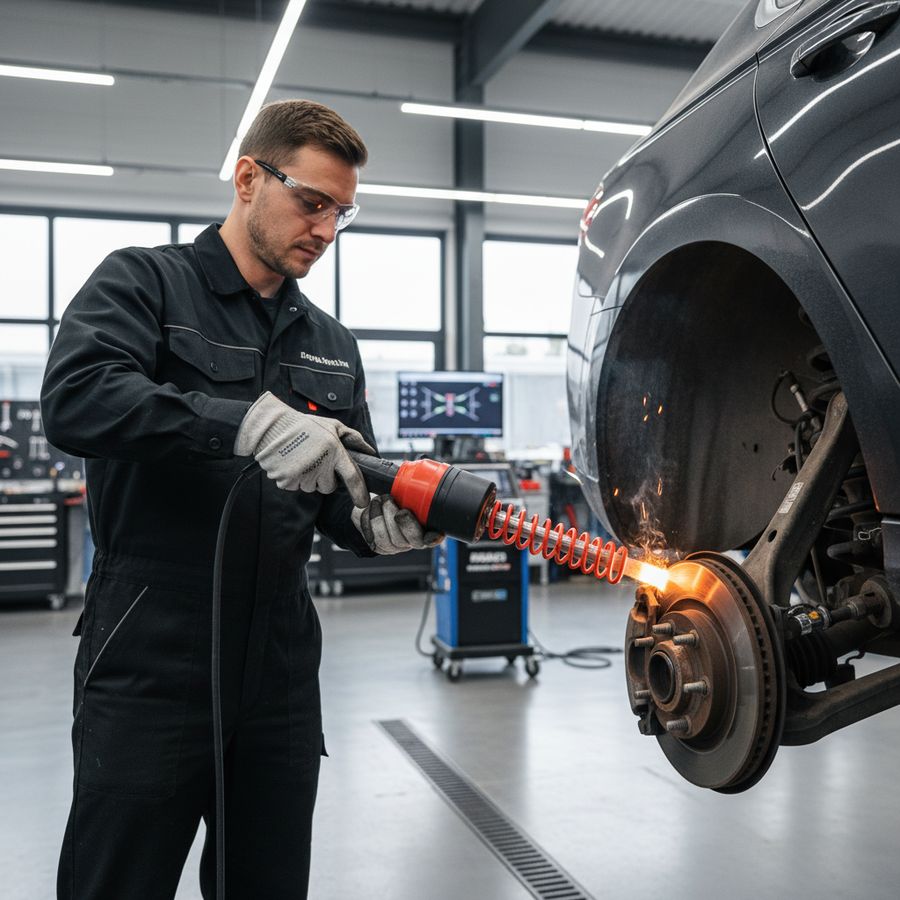
Why induction heat beats open flame
The key difference between induction heating and torch heating lies in the method of heat transfer. Torches generate an open flame that heats everything around it indiscriminately, which often leads to overheating or damaging nearby components. In contrast, induction heating directly induces heat within the metal itself by creating eddy currents, resulting in rapid and precise warming.
This targeted heating mechanism not only saves time but also prevents common issues like warping, paint damage, or rubber degradation that often occur with torches. Additionally, induction heaters eliminate the need for gas or combustible fuels, reducing both the environmental impact and operational hazards.
“Induction heating is a contactless method that can be used to heat metals safely and efficiently, without an open flame.”
Because induction heaters do not rely on flame or combustion, they offer a no open flame solution, drastically lowering the risk of accidental fires in the workshop. This makes them the preferred tool for mechanics who demand both safety and performance.
Reduce fire risk in the workshop
Using open flames in auto repair environments inevitably raises the risk of fire accidents that can cause severe damage, injury, or downtime. Induction heating technology addresses this critical concern by completely removing the flame from the equation. This means no sparks, no flames, and no chance of igniting flammable substances such as oils, grease, or fuel residues.
Workshops that switch from torches to induction heaters benefit from a safer work environment, which can also lead to lower insurance premiums due to reduced fire hazard exposure. Furthermore, induction heaters operate with minimal smoke or fumes, improving air quality and worker comfort.
-
Eliminates open flame hazards
-
Prevents ignition of flammable materials
-
Reduces insurance costs through enhanced safety
-
Improves air quality and workshop conditions
Auto repair safety is paramount, and induction heaters deliver peace of mind by significantly mitigating fire risks inherent with torch-based heating methods.
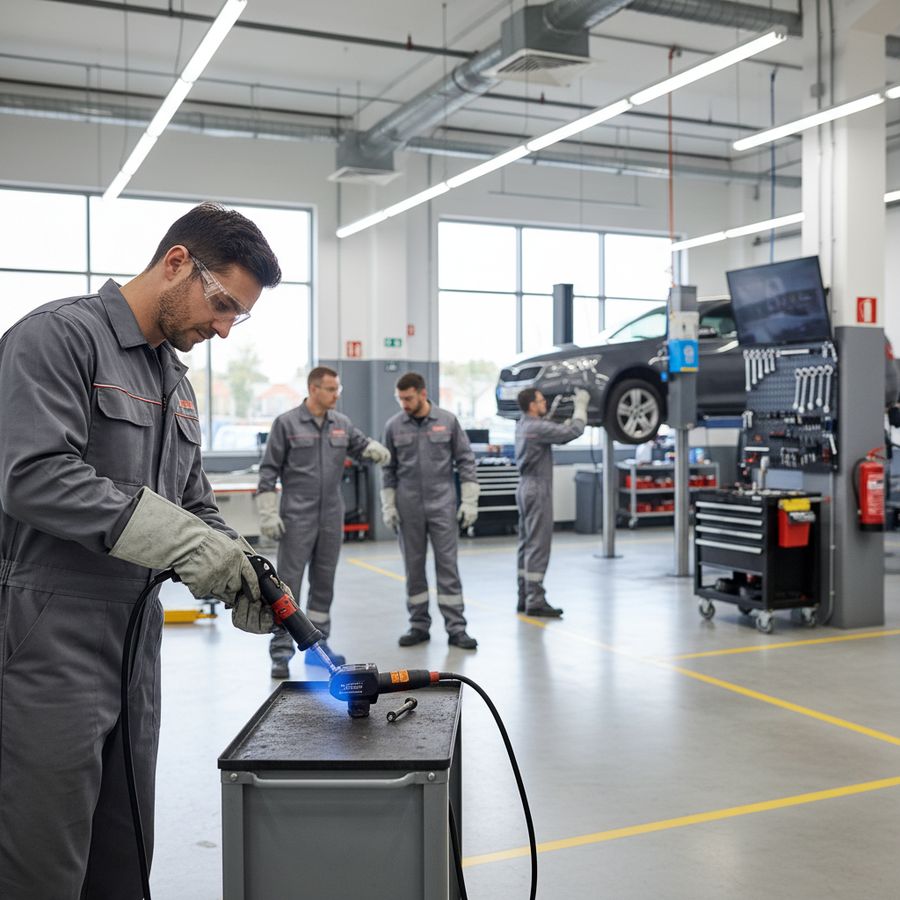
Faster heat for seized bolts
One of the most challenging tasks in auto repair is loosening seized or rusted bolts. Traditional torches can take time to heat the metal sufficiently, and uneven heating risks damaging parts or surrounding materials. Induction heating provides a breakthrough by rapidly and evenly heating bolts directly through electromagnetic induction.
This method allows mechanics to heat seized bolts faster and more effectively, reducing labor time and preventing unnecessary force that could strip threads or damage components. Induction heaters also cool down quickly after use, enabling faster workflow without long wait times.
“Induction heaters cut through stuck joints effortlessly with precise, rapid heat application.”
For professionals focused on efficiency and quality, induction heating is a game-changer when dealing with stubborn fasteners, making the repair process smoother and less stressful.
Protect paint, rubber, and wiring
Open flames from torches pose a serious threat to a vehicle’s delicate surfaces such as paint, rubber seals, and electrical wiring. Excessive heat exposure can cause discoloration, melting, or permanent damage, leading to costly repairs beyond the original mechanical fix.
Induction heating, on the other hand, delivers heat only to the metal parts needing attention without affecting nearby non-metallic materials. This precise application preserves the integrity of paintwork, rubber components, and wiring harnesses, maintaining the vehicle’s appearance and functionality.
-
Prevents paint blistering and charring
-
Protects rubber seals from melting or cracking
-
Avoids damage to sensitive wiring and connectors
Heat seized bolts safely with induction heaters to ensure no collateral damage occurs during repair, preserving both the vehicle’s value and the workshop’s reputation for quality workmanship.
Insurance and compliance considerations
From an insurance and regulatory standpoint, using induction heaters instead of torches can have significant benefits. Many insurance providers recognize the reduced fire risk associated with no open flame tools and may offer lower premiums for workshops that adopt induction heating technology.
Moreover, compliance with workplace safety standards is easier to achieve with induction heaters, as they minimize hazardous conditions related to fire and toxic fumes. This can lead to fewer inspections, lower liability, and a safer overall environment for both employees and customers.
“No gas + No flames = Lower risk and reduced insurance costs.”
Investing in induction heating equipment not only enhances operational safety but also supports compliance with industry regulations, making it a prudent choice for forward-thinking auto repair businesses.
Conclusion
In the debate of induction heater vs torch, the evidence strongly favors induction heating as the safer, faster, and more efficient solution for auto repair heat applications. By eliminating open flames, induction heaters significantly reduce fire risks while safeguarding vehicles from collateral damage. For more information on the benefits of induction heating, check out this resource.
Mechanics benefit from faster heating times on seized bolts, improved workplace safety, and potential insurance savings. The contactless and environmentally friendly nature of induction heating aligns perfectly with the evolving standards of modern automotive workshops.
Upgrade your repair process today with induction heating technology and experience a cleaner, greener, and safer way to heat metal components without compromise.


