
Induction heating for wheel bearings: a practical guide
bis Mikael Rosvall auf Apr 07, 2026

Overview
Induction heating has revolutionized the way wheel bearings are installed, offering a safe, efficient, and precise method to heat metal components without direct contact. This technology uses electromagnetic fields to induce heat within the metal hub, allowing for controlled expansion that facilitates the installation of press-fit bearings. Unlike traditional open-flame heating, induction heating is cleaner, faster, and reduces the risk of damaging sensitive parts.
The process is especially valuable in automotive maintenance and repair shops, where timely and reliable wheel bearing installation is critical. By employing induction heating tools, technicians can achieve consistent results, minimize downtime, and improve safety by eliminating flames and excessive heat exposure.
Moreover, induction heating is an environmentally friendly solution, producing zero emissions and reducing energy consumption compared to conventional methods. This makes it ideal for workshops aiming to enhance safety standards and reduce their carbon footprint while maintaining high operational productivity.
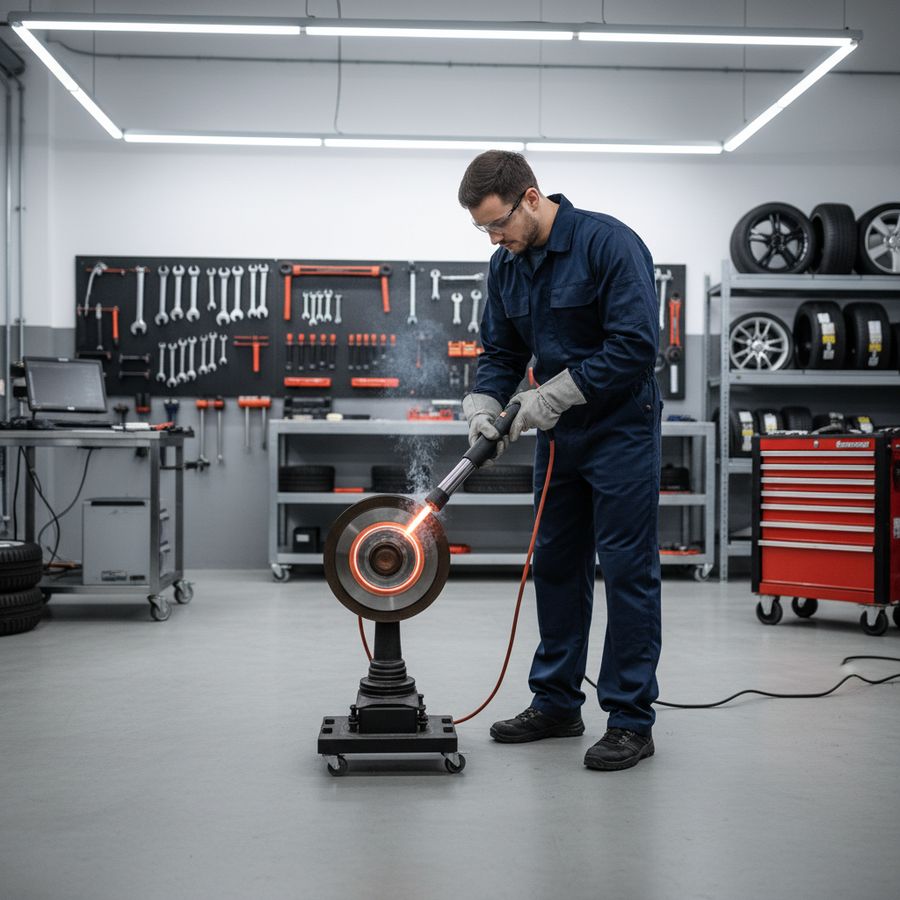
Why heat helps with bearing installation
Heating the hub before installing a wheel bearing is essential to ensure a smooth and damage-free press fit. When the metal hub is heated, it expands slightly, increasing its inner diameter. This expansion creates a temporary clearance that allows the bearing to slide in easily without excessive force.
Wheel bearing heating significantly reduces the risk of applying damaging pressure to the bearing components during installation. Bearings are precision-engineered parts that can suffer from deformation or premature wear if forced improperly. Heating prevents such damage by enabling a controlled fit.
"Proper heating of the hub is not just a convenience; it’s a critical step to preserving the integrity and longevity of press-fit bearings."
Without adequate heating, technicians may resort to excessive mechanical force, which can cause bearing race damage or misalignment, leading to early failure. Induction heating provides a uniform, controlled temperature increase, making the installation process safer and more reliable.
Safe temperatures for hubs and bearings
Maintaining safe temperatures during induction heating is crucial to protect both the hub and the bearing from thermal damage. Typically, hubs are heated to a temperature range between 80°C and 120°C (176°F to 248°F), which is enough to achieve expansion without compromising the metal's structural integrity.
Bearings themselves should never be heated directly or exposed to temperatures exceeding 120°C, as excessive heat can degrade lubrication and cause dimensional changes in the bearing components. Using induction heating focused solely on the hub ensures the bearing remains cool and ready for installation.
Monitoring temperature with infrared thermometers or thermal sensors is highly recommended to avoid overheating. Overheating can lead to warping of the hub or damage to the bearing seals, which negatively impacts performance and durability.
By controlling the temperature carefully, technicians ensure optimal expansion while preserving both the hub and bearing’s quality.
Induction coil setup around the hub
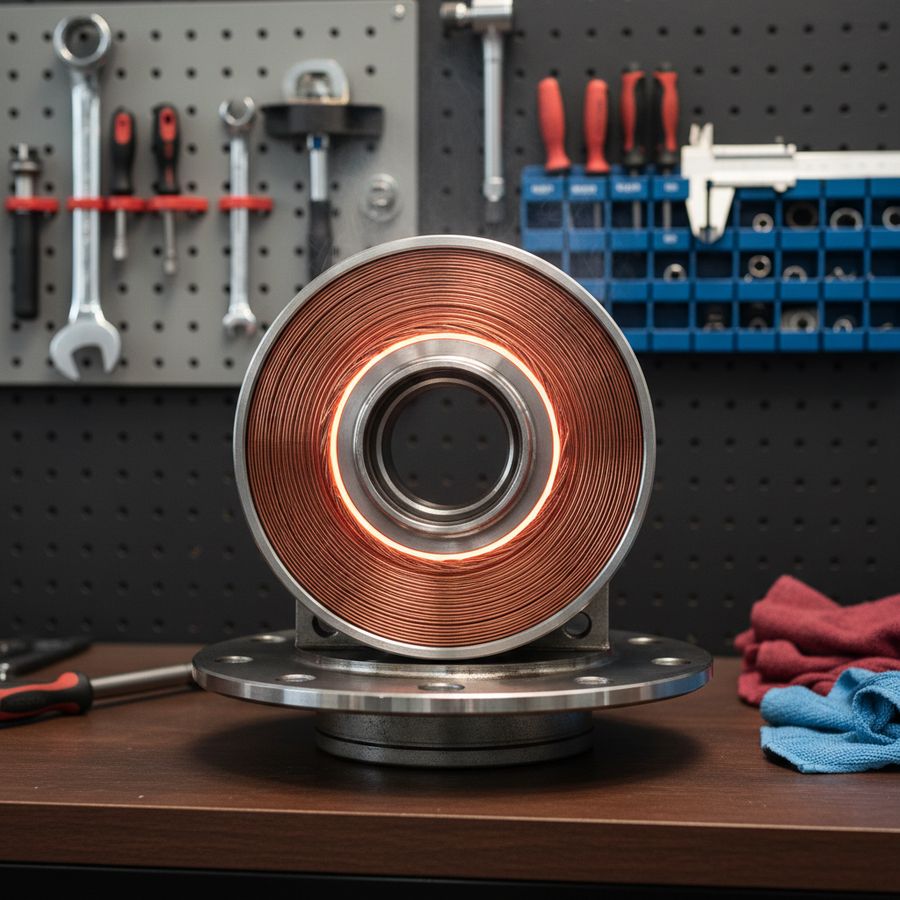
Correct setup of the induction coil around the hub is vital to achieve efficient and even heating. The coil should be positioned concentrically around the hub’s outer surface to maximize electromagnetic coupling and ensure uniform temperature distribution.
Key considerations for coil setup include:
-
Choosing the right coil size to match the hub diameter
-
Ensuring the coil is aligned parallel to the hub surface
-
Maintaining an optimal gap between the coil and the hub, typically a few millimeters
The induction heater’s power settings should be adjusted according to the hub material and thickness. Proper coil positioning minimizes heating time and avoids hotspots, which can cause uneven expansion or localized overheating.
With a well-set induction coil, the heating process becomes faster, safer, and more energy-efficient, contributing to a smoother bearing installation process.
Press-fit tips to prevent bearing damage
Installing press-fit bearings requires precision to avoid damage and ensure long-lasting performance. When combined with induction heating, several best practices help protect the bearing:
-
Heat only the hub: Avoid heating the bearing directly to preserve lubrication and structural integrity.
-
Use proper alignment tools: Ensure bearings are aligned correctly during installation to prevent skewing or uneven pressure.
-
Apply uniform pressure: Use a hydraulic press or appropriate tools that distribute force evenly across the bearing surface.
-
Allow cooling time: After installation, allow the assembly to cool naturally to lock the bearing securely in place.
Induction heating aids these tips by reducing the insertion force needed, thus minimizing the risk of damaging the bearing races or seals. Taking these precautions results in reliable, trouble-free wheel bearing installations.
Common mistakes and how to avoid them
Despite the advantages of induction heating, common mistakes can undermine its benefits and even damage components. One frequent error is overheating the hub, which can cause warping or loss of mechanical properties. To avoid this, always monitor hub temperature carefully and adhere to recommended limits.
Another mistake is improper coil positioning, which leads to uneven heating and potential hotspots. Ensure the coil is correctly aligned and sized for the hub. Additionally, some technicians make the error of heating the bearing directly, risking lubricant degradation and dimensional changes.
"Avoiding direct bearing heating is a fundamental rule to preserve bearing performance during installation."
Improper press-fit techniques, such as applying excessive force or misalignment, can also damage the bearing. Using induction heating reduces the required force but does not eliminate the need for proper mechanical procedures. Training and attention to detail are essential to prevent these pitfalls.
When to choose heating vs pressing only
Deciding between using induction heating or relying solely on pressing depends on several factors, including bearing size, fit tolerance, and material properties. Small bearings with loose tolerances may be installed by pressing alone without risk. However, larger bearings or those with tight press-fit specifications typically require hub heating.
Induction heating becomes essential when the interference fit is high, as it reduces the insertion force drastically, minimizing the risk of bearing damage. Heating also benefits hubs made from materials with low thermal conductivity, where uniform expansion by other means is challenging.
Pressing only is suitable for quick, low-risk installations but can increase the chance of mechanical damage or installation errors on more demanding fits. For critical applications, induction heating is the safer, more reliable choice, improving both installation quality and component lifespan.
Conclusion
Induction heating for wheel bearings is a practical and effective solution that enhances the bearing installation process. By safely heating the hub, it allows for easier, damage-free press-fit installations, improving reliability and reducing labor time.
Understanding the right temperatures, coil setup, and installation techniques is crucial for maximizing the benefits of this technology. By avoiding common mistakes and knowing when to apply heating versus pressing, you can save on costly repairs and extend the lifespan of your wheel bearings. For more insights, visit Induktion Store.
Adopting induction heating in your workshop promotes safer, cleaner, and more efficient operations, aligning with modern standards of automotive maintenance and repair.


